
Pick a group
Choose a group: beginning, sharing the load, or finding your own direction
Three personal readings explore a fresh work question, a kind boundary and a choice that needs room to become clear. Choose the question that meets you today.
· AI-assisted readings from randomly drawn cards. For reflection and entertainment.
Take a breath. Pick the group that draws you in.
Group 1
Group 1
Work and purpose
What deserves my attention in my work right now?
01Where you are
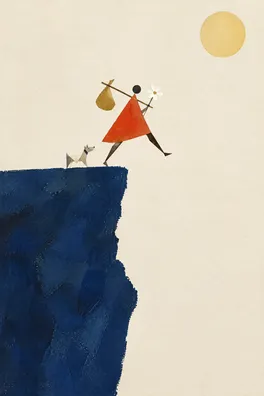
The Fool
Upright
The Fool upright, in Where you are, describes the beginning of a journey before experience has given it a definite shape. At work, this may feel like curiosity about a new role, an unfamiliar project or a way of contributing that your current routine does not allow. The card gives room to explore without requiring you to turn an early interest into a complete identity or a promise of success.
You might be attracted to a training course but unsure whether you want the career it seems to imply. Or a familiar task may invite a different approach, even if your job title stays the same. In either situation, being a beginner can bring freedom and vulnerability together. Lack of certainty does not invalidate the interest; it does mean that practical preparation still matters.
Try defining a small exploration with a clear limit: one conversation, one sample task or a short period of learning that fits your resources. Notice what becomes more interesting once you encounter the real work. The blind spot is confusing openness with having no obligations. An honest first step includes the commitments you already carry, so that discovery does not depend on a leap you cannot presently sustain.
02What needs attention
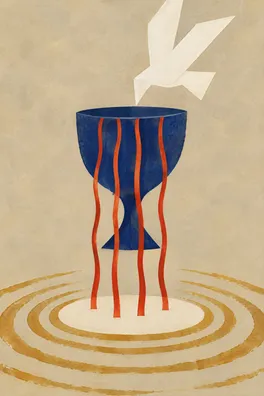
Ace of Cups
Reversed
The reversed Ace of Cups, in What needs attention, brings blocked feeling into the work question. A new beginning can look exciting while disappointment, rejection or a loss of creative energy remains unacknowledged. This position suggests that attention may be needed for the feeling beneath the plan, rather than simply for a more impressive plan.
Perhaps a proposal you cared about received little response, and every new idea now feels like a test of whether you matter. Perhaps nothing dramatic happened, but the work has stopped returning the sense of connection you once felt. These are possible situations, not conclusions about your life. The important distinction is between a project that needs better information and a feeling that needs room before it can be expressed clearly.
Name the disappointment privately in plain language, without turning it into a verdict on your ability. Pause before demanding immediate enthusiasm from yourself or recognition from someone else. You may eventually ask for feedback or explain what support would help, but the other person's response cannot be forced. An alternative reading is temporary creative blockage rather than a lasting loss of purpose; a modest pause and a smaller task may reveal which fits better.
03A small next step
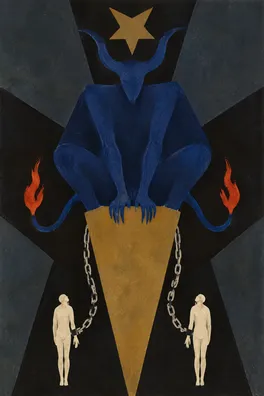
The Devil
Reversed
The reversed Devil, in A small next step, points toward recognizing a constraint and gradually regaining autonomy. In a work reading, this can mean noticing that approval, constant availability or an old definition of success has been directing more of your choices than you intended. The reversal emphasizes a transition: seeing the pattern creates an opening, but protecting that opening takes support.
Choose one constraint that has already begun to loosen. You might have discovered that an unanswered message can wait, that a particular task can be shared, or that an interest remains worthwhile without immediate praise. Strengthen that freedom through one concrete arrangement, such as a protected learning slot or a conversation about realistic response times. Keep the step small enough that you can observe its effects.
This card does not require a dramatic departure or imply that every obligation is harmful. Some limits are material and need negotiation rather than a change of attitude. If money, workload or another person's authority restricts your options, identify what is actually within reach and who could help. Autonomy grows when the next choice is both yours and practical, rather than another impossible demand to transform everything at once.
This group moves from exploration to emotional honesty and then to a protected choice. The Fool makes space for a beginning, but the reversed Ace of Cups asks you to notice whether hurt or emptiness is traveling with you. The reversed Devil suggests that a useful next step may involve loosening the habit that keeps the hurt in charge. A new course or project can be valuable; it cannot be required to repair every disappointment that came before it.
There is also a quieter possibility: your purpose may be sound while the way you are seeking approval has become exhausting. In that case, the experiment is less about replacing your work and more about giving curiosity a small area in which it does not have to perform. Allow the emotional question and the practical question to have separate answers.
For the coming week, reserve one manageable interval for an exploratory task. Before it, name the feeling you are bringing; after it, note what you learned and whether you felt more or less able to choose freely. Arrange one form of support that protects the interval. If it increases pressure or repeatedly collides with real obligations, reduce its scope or renegotiate the timing. Let the experiment show what deserves more attention before asking it to become your future.
A question to take with you
What would I like to explore if it did not have to prove my worth, and what small freedom would make that exploration possible?
Group 2
Group 2
Boundaries
Where would a kind, clear boundary support me?
01Where you are
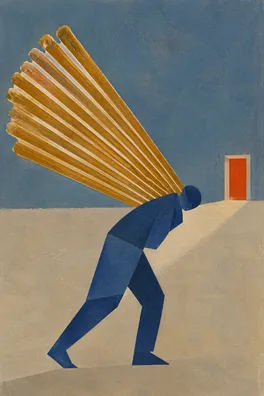
Ten of Wands
Reversed
The reversed Ten of Wands, in Where you are, describes a burden at a turning point. You may be close to setting down excess responsibility, or the load may be growing because sharing it feels difficult. The distinction matters: tiredness alone does not tell you whether relief is happening. Look at what has actually changed in your commitments and who is carrying them.
A common situation is becoming the person who remembers every detail because it seems easier than explaining the system. Another is agreeing to a small favor that quietly becomes an ongoing role. You may care deeply about the people involved and still lack the capacity to continue at the same pace. The card questions the idea that endurance is the only proof of that care.
Make a realistic inventory of this week's obligations and choose one that exceeds your capacity. Consider whether it can be reduced, deferred or shared, then state the change specifically. A boundary such as completing one part by Friday is easier to understand than a vague warning that you are overwhelmed. The alternative reading is that you are already releasing a burden; if so, notice the relief before automatically filling the space with another responsibility.
02What needs attention
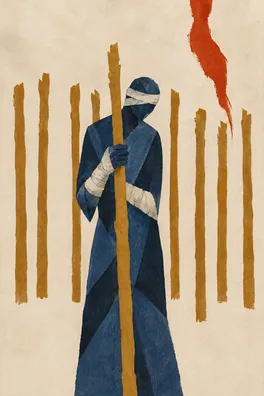
Nine of Wands
Reversed
The reversed Nine of Wands, in What needs attention, asks how exhaustion is shaping your defenses. Previous disappointments may have taught you to expect that others will not help, or to brace for criticism whenever you say no. Those defenses may once have served a purpose. This position invites you to examine whether they still protect what matters or now leave you handling everything alone.
Suppose someone offers help and you immediately imagine the mistakes you will have to repair. There may be a genuine skill gap, in which case clearer instructions or a smaller shared task could help. There may also be an old expectation that has not been checked against the present situation. Lowering your guard does not mean ignoring evidence; it means allowing a safe, limited opportunity for new evidence to appear.
Tell a trusted person what you have been bracing for and ask for practical advice about one part of the load. Choose someone who can listen without pressuring you into disclosure or reconciliation. If the response is dismissive, that is information about this particular exchange, not proof that you should never seek support. A kind boundary can include selective access to your energy as well as a willingness to receive help where it is dependable.
03A small next step

Knight of Cups
Upright
The Knight of Cups upright, in A small next step, brings heartfelt action into a reading about limits. Its invitation is to express care in a form another person can understand and freely respond to. A boundary can have that quality: clear about what you can offer, considerate about how you communicate it and open to discussion without surrendering your capacity.
You might say that you would like to help with a shared task for one hour and invite the other person to choose which part matters most. Or you could ask for a short conversation about redistributing responsibilities, naming one change you need. The warmth comes from an honest intention to connect; the clarity comes from a specific limit. An invitation remains low-pressure only if a refusal or a different suggestion is allowed.
The Knight's idealism also needs care. A beautifully phrased request will not guarantee a gracious response, and kindness does not require you to keep negotiating past your limit. Prepare a simple restatement of what you can do. If emotions rise, a pause may serve the relationship better than promising more to restore immediate harmony. Let the action express your values while leaving the other person's feelings and choices with them.
The two reversed Wands cards show why a boundary can feel difficult even when the workload clearly needs to change. The Ten concerns the burden itself; the Nine concerns the defenses that develop around carrying it. The Knight of Cups offers a route through communication that is warm enough to preserve connection and specific enough to make a difference. The reading does not require either silent endurance or a dramatic confrontation.
Consider which part needs to move first. If your capacity is already exceeded, the commitment may need an immediate adjustment before a deeper conversation is possible. If the practical load is manageable but you remain constantly braced, the more useful step may be asking for advice or testing a small act of trust. These situations can overlap, but they do not need identical responses.
This week, choose one recurring obligation and write a sentence that names what you can offer, what you cannot offer and a possible next arrangement. Share it in a suitable moment, then notice whether the actual burden changes. Review the result after several days. If everyone agrees warmly but the same work still falls to you, make the arrangement more concrete; if the limit proves too tight, adjust it deliberately rather than abandoning it from guilt. A useful boundary creates a more sustainable way to care.
A question to take with you
Which responsibility could I make more sustainable by pairing a clear limit with an honest, low-pressure invitation?
Group 3
Group 3
Choosing a direction
What can help me clarify a choice without rushing?
01Where you are

Three of Swords
Reversed
The reversed Three of Swords, in Where you are, points toward pain beginning to ease, letting go or recovery. When the question is choosing a direction, it suggests that an earlier disappointment may still influence the options that feel available. Some distance from the hurt can return a sense of choice, even before the feeling has entirely passed.
Perhaps a previous collaboration ended badly and a new invitation now brings both interest and apprehension. Or an old decision has become a harsh story about your judgment. Recovery does not require you to restore the former arrangement or prove that the hurt was useful. It can mean understanding more clearly what happened and which conditions you need in a future choice.
Write down the thought that keeps returning, then separate the observable fact from your assumption and your present need. A fact might be that a plan ended; an assumption might be that every similar plan will end the same way. Your need could be clearer expectations or a slower start. The blind spot is rushing to demonstrate that you have moved on. A smaller, reversible decision may give recovery room while still allowing life to continue.
02What needs attention

The Star
Upright
The Star upright, in What needs attention, asks you to attend to the return of hope rather than demand certainty. After a difficult experience, a quiet sense that something could be different may be easy to dismiss because it lacks the intensity of fear. This card values renewal, honest self-expression and small signs that the future is not fully defined by the past.
In a choice, that might mean noticing the option that leaves you with a little more energy or permits you to speak more honestly about what matters. This feeling is worth listening to, but it is not proof that the option will work. Hope can identify something to explore; practical questions about time, resources and compatibility still deserve answers.
Do one small thing that restores a little energy before returning to the decision. Then look for actual evidence of possibility: a useful conversation, a manageable first stage or a condition that differs from the old situation. An alternative reading is that you need renewal before you can fairly assess any option. If every path looks equally bleak when you are depleted, allow a pause and return with support rather than treating that moment's outlook as the final verdict.
03A small next step

Queen of Cups
Reversed
The reversed Queen of Cups, in A small next step, draws attention to feelings and boundaries. Sensitivity can become confusing when you take responsibility for everyone else's disappointment or seek enough approval to make your own uncertainty disappear. This position suggests creating a little emotional space so that care for others does not erase your own needs.
You might be discussing a decision with several people and absorbing a new preference in each conversation. Their concerns may contain useful information, yet repeated discussion can leave you less clear about your own priorities. Set a time limit for one draining exchange and allow quiet recovery afterwards. Before seeking another opinion, write which concern belongs to you and which belongs to someone else.
The purpose is not to dismiss other people's needs or treat strong emotion as unreliable. If a choice affects them, their practical circumstances deserve consideration. The distinction is between considering an effect and becoming responsible for preventing every uncomfortable feeling. If your own preferences remain unclear, name what you do know and postpone the parts that need more information. A limited, honest answer can support a better choice than an agreement made to keep everyone calm.
This group moves through recovery, renewed possibility and emotional differentiation. The reversed Three of Swords allows the past to become information instead of a fixed judgment about you. The Star opens a hopeful direction, while the reversed Queen of Cups asks whose feelings are shaping the decision. Together they suggest that clarity can grow through a gentler process without becoming vague or passive.
A hopeful option is not automatically the right one, and an anxious reaction is not automatically a warning to stop. Either may reflect the present situation, an old experience or exhaustion from too many conversations. Give each feeling a place, then examine the conditions of the choice separately. You do not have to make the emotion disappear before gathering useful information.
Over the next week, choose one reversible way to learn about an option. Begin after a small restorative activity, keep the inquiry bounded and leave time afterwards without outside opinions. Note the facts you learned, the need that became clearer and any borrowed worry you can return to its owner. If the step exposes a real constraint, adapt the option; if it mainly stirs old self-criticism, slow down and seek a steadier conversation. The experiment is worthwhile when it helps you distinguish hope, evidence and emotional obligation.
A question to take with you
What small evidence of possibility can I follow while allowing other people to have feelings that I do not have to solve?