
Pick a group
A little more room for the season ahead
Three readings explore a blocked beginning, a creative departure and a steadier transition. Choose the question that meets your circumstances and try one manageable experiment.
· AI-assisted readings from randomly drawn cards. For reflection and entertainment.
Take a breath. Pick the group that draws you in.
Group 1
Group 1
Making space
What could I put down to make a little more room?
01Where you are
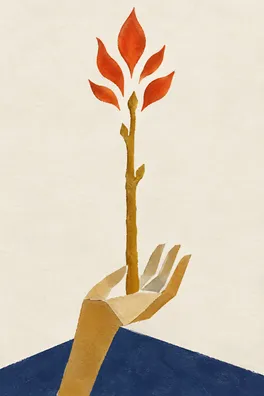
Ace of Wands
Reversed
The reversed Ace of Wands at Where you are describes a beginning that has not found its conditions. Inspiration may be delayed, interest may have faded, or your energy may already be committed elsewhere. In a reading about making space, the useful distinction is between a wish you still value and the obligation to keep proving enthusiasm for it. A stalled start does not tell you which one you are carrying.
Perhaps a course, side project or household change remains on your list because it once felt exciting. Every reminder now produces guilt, yet removing it feels like betraying a possible future. Check the actual obstruction: lack of time, a missing resource, or a quieter loss of desire. If the obstacle is temporary, a clear pause and review date may protect the idea. If the interest is gone, permission to stop rehearsing the beginning can release attention for something more alive.
02What needs attention

Three of Pentacles
Reversed
The reversed Three of Pentacles at What needs attention shifts the focus from private motivation to how work is organized. Poor coordination, uneven skills or inconsistent standards can produce rework that looks like a personal failure to keep up. You might be carrying not only your task but the hidden work of translating unclear requests and repairing mismatched expectations.
Consider a shared project where everyone says they want it finished but means something different by finished. More effort may simply create another round of corrections. Choose one recurring point of friction and ask who owns it, what the deliverable is and how completion will be recognized. An alternative is that someone genuinely needs training or a smaller scope; clarity alone cannot create a missing skill. Name the practical gap without turning it into a verdict on anyone’s worth.
03A small next step

Queen of Swords
Upright
The upright Queen of Swords at A small next step offers discernment, fairness and direct language. After two reversed cards, she does not demand a heroic burst of productivity. She asks for one accurate boundary that distinguishes what you can do from what has been left vague. Clear speech can make room because it stops an undefined commitment expanding silently.
Try a sentence such as: I can complete this part by Thursday, and the additional revision needs another owner or a later date. Adapt it to what is actually true. Leave room for a response, then record the agreement so you do not have to carry it in memory. The Queen’s blind spot is a tone so final that it prevents useful cooperation. You can be firm about capacity while remaining curious about a different way to meet the shared need.
These cards suggest that making space may begin with an honest account of a delayed start and the labor surrounding it. The reversed Ace of Wands asks whether the spark still belongs to you; the reversed Three of Pentacles asks whether the structure is wasting that spark; the Queen of Swords turns the answer into a clear arrangement. Simply dropping a project could miss a coordination problem, while simply improving coordination could preserve a commitment you no longer want.
For one week, select a single stalled commitment. Spend a few minutes naming the obstacle, then either pause it with a review date or clarify one expectation with the people involved. Use the recovered time for something specific, even a quiet meal, so the space does not immediately fill with another promise. Notice whether relief comes from less work, less ambiguity or less guilt; each answer suggests a different next adjustment.
If the work becomes more manageable after clarification, the beginning may need better conditions rather than abandonment. If interest stays absent once those conditions improve, allow that information to count. What would you stop carrying if a past enthusiasm no longer had to become a present obligation?
A question to take with you
Which commitment needs better conditions, and which one am I maintaining mainly to avoid the discomfort of letting it go?
Group 2
Group 2
Creative energy
What would help my creativity find its way forward?
01Where you are

Death
Reversed
Death reversed at Where you are points to an ending repeatedly postponed. This is a symbolic reading about attachment to an exhausted phase, not a literal event. Creativity can stall when a familiar format, role or standard remains in charge long after it stopped helping you make anything that feels meaningful. Familiarity can offer safety even when it no longer offers movement.
You might keep revising the same opening, preserving an old portfolio style or trying to recreate praise from an earlier project. Before discarding anything, ask what that familiar arrangement once protected: belonging, competence or a reliable process. Preserve what still serves you and identify one element whose job is finished. The alternative is that you need a period of rest rather than an ending. Do not force a dramatic reinvention merely because progress has slowed.
02What needs attention

Eight of Cups
Upright
The upright Eight of Cups at What needs attention brings a deliberate search for deeper fulfillment. It recognizes that something can have mattered and still no longer be enough. Next to Death reversed, it asks what you are moving toward, so leaving does not become an empty performance of change. The emotional gap deserves language before it becomes a sweeping decision.
Perhaps the work is technically successful but gives no room for the questions that now interest you. Name the part you want to leave and the value you want closer: experimentation, honesty, play or a different audience. Then try a small departure, such as a private sketch in an unfamiliar medium. Changing surroundings may help, but the card’s alternative question is whether the way you work within those surroundings needs to change. Notice whether the experiment brings curiosity or only the temporary relief of escape.
03A small next step

Six of Pentacles
Reversed
The reversed Six of Pentacles at A small next step brings attention to unequal exchange and help with conditions attached. Creative freedom can shrink when access to space, money, praise or collaboration comes with expectations you have not freely accepted. The card does not establish another person’s intention; it directs you to the actual terms and to your ability to say both thank you and enough.
Choose one exchange to clarify. Perhaps a friend lends equipment but expects unlimited unpaid revisions, or a collaboration gives you exposure while leaving ownership vague. Specify the contribution, duration and permission involved, then ask whether those terms work for both sides. You may also discover that you have offered more than the other person requested. Renegotiating your own offer can be as important as setting a limit on someone else’s request.
This group moves from an unfinished ending to a purposeful departure, then asks what resources and relationships can support it fairly. Death reversed names the pull of familiarity; the Eight of Cups gives the departure a value to move toward; the reversed Six of Pentacles asks what freedom the available help really permits. None of the cards requires you to leave a job, person or community. A change in one working agreement may be enough to let creativity breathe.
For the coming week, put one exhausted creative rule on pause and give yourself a brief private session outside it. Before the session, clarify one relevant resource or exchange: when equipment is available, who owns the draft, or how much feedback you are offering. Afterwards, write down what felt more meaningful and what remained difficult. This keeps the experiment connected to experience rather than to an idealized new identity.
If the new format feels empty too, revisit rest, skill needs or the scale of the task before deciding that you must leave more behind. If the work feels alive but the arrangement remains restrictive, make the next conversation more specific. What kind of creative support could you accept with gratitude while still retaining a free choice about your work?
A question to take with you
What am I ready to leave in my creative process, and which terms of support would let the next experiment remain my own?
Group 3
Group 3
A change of season
How can I meet a transition with more steadiness?
01Where you are

Seven of Cups
Upright
The upright Seven of Cups at Where you are shows possibilities, tempting images and uncertainty about what can become real. A transition often makes several futures imaginable at once: a different routine, a new place, a more ambitious plan. Imagination can help you see beyond a familiar season, but it can also make every ordinary choice feel inadequate beside a polished alternative.
Rather than choosing an entire future, choose one practical detail to verify. If a new activity appeals, check its actual travel time, cost or weekly commitment. If a quieter routine appeals, look at what would need to be removed for it to exist. The card does not ask you to distrust every hope. It asks whether the option answers a real need or mainly offers the pleasure of imagining a life without constraints.
02What needs attention

Queen of Pentacles
Upright
The upright Queen of Pentacles at What needs attention places practical care beneath the choices. Her steadiness comes from managing resources and tending the spaces where ordinary life happens. During a transition, the foundations can seem too modest to matter, yet meals, usable work space and a realistic budget determine how much change you can comfortably absorb.
Choose the form of care that meets your present circumstances. Preparing food for a busy day may help more than buying equipment for a new routine; clearing one surface may help more than reorganizing your whole home. If you care for others, include your own needs in the plan. The Queen’s alternative lesson is that comfort can become a reason never to experiment. Build a supportive base without requiring every uncertainty to disappear before you take a small step.
03A small next step

Temperance
Upright
The upright Temperance at A small next step invites patient integration rather than an abrupt swing from one extreme to another. In this position, balance is something you adjust while living, not a perfect schedule you must achieve first. You can carry a useful element of the previous season into the next while changing what no longer fits.
Try shortening one work session and placing a real break after it, or introduce a new activity at a frequency that leaves recovery time. Notice how the pace feels over several days, including its effect on your other responsibilities. If the adjustment is too small to change a draining pattern, make it more explicit. Moderation should support sustained movement rather than become a polite name for indefinitely postponing a needed change.
The Seven of Cups opens many doors, the Queen of Pentacles checks what supports you on the threshold, and Temperance helps you enter at a sustainable pace. Together they suggest that steadiness comes from connecting an attractive possibility to daily resources and then learning through gradual use. A practical constraint may refine a hope without destroying it; a small experiment may reveal a better version of the transition than the one you first imagined.
Choose one possibility for the coming week and verify its most important practical detail. Prepare one supporting resource, such as a clear workspace or a protected hour, then try the change at a manageable pace. Keep one familiar routine that still helps. At the end of the week, reflect on energy, usefulness and the amount of recovery required, rather than judging yourself by how completely you transformed your life.
Adjust if the new pace repeatedly crowds out basic care or if caution keeps you from trying anything at all. Both are information about the fit between the plan and your circumstances. You are allowed to revise the arrangement as the season becomes clearer. Which small change could you support in ordinary life, even after the excitement of imagining it has faded?
A question to take with you
Which possibility answers my present needs, and what practical support and pace would let me test it steadily?