
Pick a group
Pick a group: clarity, curiosity, or a chapter ready to change
Choose the question that meets you today: a habit closer to your values, a more open approach to learning, or a careful return to something unfinished. Let the cards suggest an experiment you can adapt.
· AI-assisted readings from randomly drawn cards. For reflection and entertainment.
Take a breath. Pick the group that draws you in.
Group 1
Group 1
Habits and intention
Which small habit would better reflect what matters to me?
01Where you are

Ace of Swords
Upright
The Ace of Swords upright meets you in Where you are with the possibility of a clear thought or firm decision. You may already have a sentence that cuts through a familiar excuse: you want more time for a friendship, more attention for creative work or less of your evening surrendered by default. The card does not establish which value is yours. It invites you to say the actual question plainly enough that you can recognize an answer.
Clarity can also become forceful. If your new understanding sounds like an accusation against your earlier self, it may produce a dramatic rule that is difficult to live with. Separate the truth you have noticed from the punishment you are tempted to attach to it. Wanting an attentive evening does not mean every distracted evening was a failure.
Write the habit question in one line, then find one ordinary fact that could verify your impression. Perhaps a calendar shows that the time you thought was free is already occupied. That changes the practical problem without invalidating the value. Let the decision begin with accurate information, and leave room to learn something you did not expect.
02What needs attention

Eight of Cups
Upright
The Eight of Cups upright places the need to leave something unfulfilling in What needs attention. Here a habit may persist because it once helped you, because other people expect it or because you have invested so much in doing it well. Disappointment can be useful information about a growing gap between repetition and meaning. It does not prove that the past was wasted or that everything around you must be abandoned.
For example, a long evening routine might have offered companionship during a lonely season but now leave no room for the project you care about. The question is not simply whether the routine is good or bad. It is which need it still serves and which need remains unmet. If exhaustion is the main problem, leaving a meaningful activity may remove support rather than restore freedom.
Name the part you would leave and the value you hope to approach before changing your schedule. Try reducing one automatic repetition instead of declaring a complete departure. Notice whether the space brings renewed attention, relief or unexpected loneliness. That response helps distinguish an adjustment in how you live from a larger change in surroundings.
03A small next step

The Tower
Upright
The Tower upright is an intense card in A small next step. Its meaning concerns upheaval and the exposure of unstable foundations; it does not require you to create a crisis or predict that one is coming. In this position, a small action can be an honest check of the assumption holding a habit together. You may be relying on a perfectly quiet morning, another person’s constant availability or an energy level you rarely have.
Choose one important commitment and review its backup plan. If a daily practice matters to you, decide what its modest version looks like when the usual conditions collapse. Ten uninterrupted minutes may become two minutes of preparation, or a missed conversation may become a specific request to reschedule. The purpose is to keep contact with the value when the structure cannot hold.
Do not mistake flexibility for concealing a broken arrangement. If the backup is needed every day, the main plan may need rebuilding. Notice which assumption failed and what remained dependable: your intention, an available friend or a realistic limit. A workable foundation can be less impressive and much more honest than the routine it replaces.
This group begins with a clear question, moves through the disappointment that makes change necessary and ends by examining the structure supporting the habit. The Ace of Swords offers a decision, but the Eight of Cups asks what emotional purpose the old pattern served. The Tower prevents a tidy answer from depending on conditions that never last. Together they suggest a small, truthful redesign rather than a test of how sternly you can command yourself.
For one week, attach a manageable action to a value you can name. If the value is connection, it might be a brief message you send with full attention; if it is creativity, it might be preparing tomorrow’s materials. Make space by reducing one repetition that no longer fulfills you, and choose a backup for a disrupted day. Observe the effect rather than awarding yourself a perfect streak.
An alternative explanation deserves room: perhaps the habit reflects what matters, but your circumstances have made it too expensive in time or energy. In that case, preserve its purpose and ask for help or change its scale. At the week’s end, keep the adjustment only if it brings you closer to the value without requiring you to deny a real limitation. What did the experiment reveal about the foundation you actually need?
A question to take with you
What could I stop doing automatically so that one important value has a realistic place in my day?
Group 2
Group 2
Learning
What approach could make learning feel more open?
01Where you are
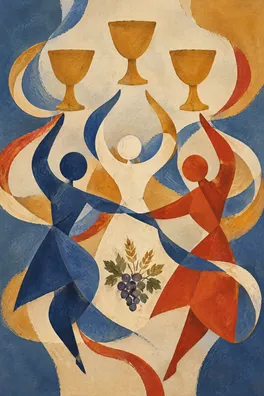
Three of Cups
Upright
The Three of Cups upright appears in Where you are as an image of learning held by friendship, shared joy and community support. You might have access to people who enjoy the subject, remember your efforts or can celebrate a small discovery with you. The card does not promise a welcoming group is already available. It asks whether learning has become unnecessarily private, with every difficulty experienced as a personal verdict.
A conversation can make an unfamiliar subject feel more approachable because another person supplies an example, a laugh or permission to ask an unfinished question. Consider sharing something you recently understood, even if it is modest. Invite the other person to share a discovery of their own so the exchange remains reciprocal rather than an examination of your progress.
There is a blind spot in community too: comparison can hide inside celebration. If a group makes you perform expertise or hurry through foundations, more participation may not produce more openness. Look for a relationship where curiosity can be visible and small achievements receive care. The useful support is the kind that lets you remain a learner.
02What needs attention

Eight of Swords
Upright
The Eight of Swords upright brings restriction to What needs attention. Learning can feel closed when you lack time, accessible materials, money or a necessary explanation. Fear and habitual judgments can tighten those limits further, but the card does not reduce every barrier to an attitude problem. Start by distinguishing what is concretely unavailable from what has become an unexamined conclusion about your ability.
For example, being unable to attend a scheduled class is a real constraint. Concluding that you therefore cannot learn the subject at all adds a second claim that may deserve investigation. A recording, a different pace or a study partner might help; they might also be unavailable, and that deserves acknowledgment. Name the precise obstacle before prescribing confidence as its solution.
Choose one limitation and turn it into a factual sentence. Then identify one question you could ask or one accommodation you could explore. Notice whether additional information changes your options, even slightly. If it does not, the next useful step may be seeking practical support or postponing part of the task, rather than blaming yourself for not finding an exit.
03A small next step
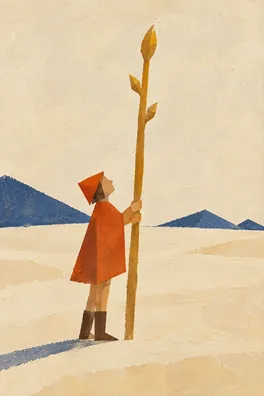
Page of Wands
Upright
The Page of Wands upright brings an inexperienced but energetic learner into A small next step. Curiosity is the resource here. Once you have named a constraint, the invitation is to try a small unfamiliar approach without requiring it to prove you are talented. A different medium, a simple demonstration or a playful example can show you what attracts your attention and where understanding breaks down.
Keep the trial specific. If reading a chapter leaves you lost, try sketching one process or explaining one idea aloud, then compare it with a reliable explanation. Share a question with the supportive person suggested by the first card if that feels useful. Surprise is information: you may discover that an apparently advanced problem rests on one missing term, or that the medium itself was hiding what you understood.
Enthusiasm can also scatter attention across endless beginnings. Give this experiment an endpoint before starting another resource. Record one thing you learned and one question that remains. The Page supports a beginner’s initiative, while the other cards remind you that initiative works best with suitable support and an honest view of constraints.
This reading makes openness a relationship between support, limits and exploration. The Three of Cups offers shared enjoyment; the Eight of Swords shows why enjoyment alone may not remove a barrier; the Page of Wands brings an experiment small enough to begin within the options you actually have. None requires pretending that a difficult subject is easy or that every learning environment is accessible.
During the coming week, choose one idea and one supportive contact or resource. Describe the obstacle precisely, then try a single alternative way to work with that idea. Afterward, share a modest discovery or question, allowing the exchange to include what you do not know. This gives community a concrete role instead of treating belonging as another achievement you must earn.
If the experiment increases confusion, that is a reason to adjust its scale or seek a clearer foundation, not proof that curiosity failed. If comparison becomes louder than interest, change the social setting. If the practical barrier remains, make the request for support more specific. At the end of the week, ask which part of learning felt newly possible and what conditions made that opening possible.
A question to take with you
Which learning limit could I describe more precisely, and who or what might help me explore one real option?
Group 3
Group 3
An unfinished chapter
How can I approach something I have left unfinished?
01Where you are
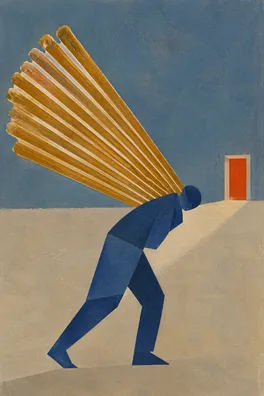
Ten of Wands
Reversed
The Ten of Wands reversed appears in Where you are with two possibilities: the load is accumulating because it cannot be shared, or you are beginning to set down responsibility that has become excessive. An unfinished chapter can belong to either story. A delayed project may still matter deeply, while the version you promised has outgrown what you can carry. Feeling relief when you step away does not by itself settle whether to return.
Before planning another push, name your actual capacity this week. Include the responsibilities that are easy to dismiss because nobody sees them. Then separate the unfinished task from the extra burden of proving you can complete it without help. A smaller scope, a shared task or a revised deadline may change what is possible.
The alternative is that repeated reduction has become avoidance of one necessary conversation or decision. Notice whether setting down a burden frees attention or simply moves the same worry into the next week. Choose one commitment to renegotiate in concrete terms, including what you can deliver and what you cannot. Capacity is information, not a contest in endurance.
02What needs attention

Six of Cups
Reversed
The Six of Cups reversed brings your relationship with the past into What needs attention. An unfinished matter may be tied to an older role, an idealized memory or a promise made by a version of you with different needs. Another reading is that you are already becoming independent of that role and need permission to let the present shape the ending. Neither interpretation tells you what another person feels or requires you to erase the past.
Imagine reopening a project because you miss how capable, connected or hopeful you felt when it began. The wish is understandable, but completing the old plan may not recreate that feeling. Ask which part still matters now and which part is an attempt to return to a lost setting. A meaningful memory can be honored without making it a permanent obligation.
Adapt one long-standing practice to your current circumstances. You might replace an elaborate restart with a short review of what remains useful. If the desire to finish survives that honest update, it has a clearer foundation. If it fades, you have learned something about the attachment, even if you still need time to decide how to close the chapter.
03A small next step

Three of Swords
Upright
The Three of Swords upright makes A small next step emotionally direct. Its meaning concerns heartbreak, grief and painful truth, so the invitation is not to turn every unfinished task into a tragedy. It is to acknowledge an actual hurt if one is keeping the matter suspended. Perhaps the project followed a separation, a collaboration ended badly or the hoped-for result is no longer available. The card cannot establish that any of these has happened to you.
If there is such a loss, write down one uncomfortable fact and the feeling it brings. Keep the fact separate from a global judgment about yourself: something ended or was not completed does not mean you are incapable of commitment. You can choose quiet time to sort through the feeling or speak with a trusted person, with a boundary around how much you wish to share.
A small next step may be acknowledging what cannot be repaired before deciding what can still be done. If the task carries no deeper hurt, use the card more simply as permission to admit disappointment without dramatizing it. Honest limits on the conversation and the workload can protect the space needed for a practical decision.
The two reversed cards loosen the idea that completion must mean carrying the original burden in the original way. The Ten of Wands asks what can realistically be held; the Six of Cups asks whether an old role still fits. The Three of Swords then makes room for the disappointment a revised ending may expose. The movement is from workload, through attachment, to a truth you can acknowledge without forcing an immediate resolution.
For the coming week, give the unfinished matter one bounded appointment. Begin by listing what remains, then mark what still serves your present needs. Choose a modest action: ask for help, renegotiate a promise, complete a smaller useful part or write a clear note about why you are considering closure. If grief or hurt is involved, make room for it separately instead of demanding that productivity resolve it.
An alternative reading is that the chapter remains worthwhile and simply needs practical resources. In that case, accepting help can be the turning point; leaving is not automatically the wiser choice. After your appointment, notice whether the next step feels clearer and proportionate. If it leaves you more overwhelmed, reduce the task or seek support before scheduling another push. What kind of ending would respect both the original meaning and your life today?
A question to take with you
What am I trying to finish in the present, and what feeling from the past am I hoping completion will restore?