
Pick a group
Choose a group: a fresh way to create, belong or care
Three personal readings explore a creative structure that needs rebuilding, a fairer sense of home, and friendships with room for both appreciation and change. Choose the question that feels useful today.
· AI-assisted readings from randomly drawn cards. For reflection and entertainment.
Take a breath. Pick the group that draws you in.
Group 1
Group 1
Creative energy
What would help my creativity find its way forward?
01Where you are

The Tower
Upright
The Tower upright, in Where you are, suggests an assumption or structure that no longer feels dependable. In creative life, this might be a project format that cannot carry the idea, feedback that exposes a weakness, or a routine built around time you no longer have. The card’s upheaval is a lens for recognizing a rupture if one is present; it does not announce that a crisis is coming.
The discomfort can come from losing an explanation of yourself: perhaps you believed a capable creator should get it right without revision, or that one particular outcome would prove your worth. When that belief fails, even useful feedback can feel like the whole project collapsing. Separate the unstable structure from the skills, observations and relationships that remain available. A failed approach can reveal a constraint without declaring every part of your work useless.
Review a backup plan for one important commitment. If the ambitious version cannot happen, what smaller form would still communicate the central idea? Preserve a rough draft or a note before dismantling anything. There is also an alternative reading: a difficult afternoon may call for rest rather than reinvention. Look for a repeated mismatch between the plan and reality before treating frustration as a reason to rebuild everything.
02What needs attention
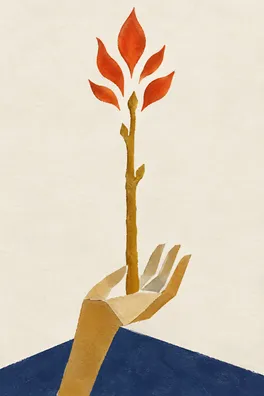
Ace of Wands
Upright
The Ace of Wands upright, in What needs attention, focuses on the fresh spark that needs room after disruption. Inspiration may arrive as a small curiosity rather than a grand replacement plan: a texture you want to try, a sentence you keep hearing, or a method that suddenly looks interesting. This position asks you to notice what has energy, without demanding that it immediately justify a finished project.
After disappointment, it is easy to dismiss a new impulse as too slight to count. It is also easy to rush toward it because excitement briefly relieves the discomfort of the old work. The ace holds a beginning, not a completed promise. Give the impulse a modest container so you can learn whether you enjoy the making itself, rather than only the prospect of starting over.
Spend fifteen minutes producing a first version: a sketch, a few lines, a rhythm or a paper arrangement. Then note what remains unknown and what you would willingly try again. If you are depleted, preparing the materials may be the beginning you can manage today. The useful sign is renewed contact with curiosity, not the number of ideas generated or someone else’s immediate approval.
03A small next step

The Magician
Upright
The Magician upright, in A small next step, turns attention to deliberate use of resources already within reach. Its willpower and skill are most useful here when they connect intention to an actual act. You may already know how to tell a story, edit a photograph, organize an experiment or ask a precise question. Choose one ability that serves the spark instead of waiting to become expert at everything the larger project might require.
For example, if a planned film has become impractical, use a phone and your existing editing skill to test one scene. If a long essay feels inaccessible, shape one paragraph around an observation you understand well. Define the small outcome before beginning, and let that boundary protect your attention. The step is complete when it teaches you something concrete about the idea, even if the result remains rough.
The blind spot is confusing personal agency with total control. Other people’s time, access to tools and material limits still matter; persuasive presentation cannot replace a workable process. Record one resource you used and one resource you truly lack. That distinction lets you ask for specific help while keeping ownership of the part you can do.
These cards move from a structure being questioned, to a spark receiving attention, to skill giving that spark a form. The Tower and The Magician can seem opposed: one exposes the limits of control, while the other emphasizes agency. Together they suggest that agency becomes more useful when it starts from the conditions that actually exist. You do not need to recover the old plan before you can make something meaningful.
The Ace of Wands prevents rebuilding from becoming only an exercise in repair. Ask what still interests you after the pressure to prove yourself is set aside. If the old project remains alive, the fresh spark may belong inside it. If it has lost its purpose, the experiment may help you identify what to carry into a different form. Neither reading requires a dramatic public decision.
Over the coming week, choose one assumption to test and make a small version using a skill you already have. Allow one session for making and another for looking back. Note what surprised you, what held your interest and what constraint remained. If the experiment repeatedly exceeds your available energy, reduce the scope; if it clarifies a useful next question, let that question guide the next attempt. What part of your creative identity could become more flexible while your care for the work stays intact?
A question to take with you
If I no longer had to prove that my original plan was right, what small thing would I feel curious enough to make?
Group 2
Group 2
Home and belonging
What would make my sense of home feel more supportive?
01Where you are

The World
Upright
The World upright, in Where you are, brings completion, integration and belonging into view. Home may be asking you to recognize a phase that is ready to feel finished: settling into a room, ending a period of transition, or acknowledging that your idea of family has widened. Completion does not require a perfect space. It can mean recognizing what you have built and allowing it to count.
Perhaps you keep postponing comfort until every practical task is done, or compare your surroundings with an image of how an established life should look. The World invites you to gather the parts that already support you: a familiar walk, a person who welcomes you, a routine that travels with you. For someone living between places, belonging may be distributed across relationships rather than contained in one address.
Finish one nearly complete task that would help you settle, then pause to name what that task gives you. It might create room to eat comfortably or make a personal corner usable. The alternative to consider is that a tidy ending can hide unfinished feelings. Let gratitude coexist with grief or uncertainty; integration has room for what is still complicated.
02What needs attention

Justice
Reversed
Justice reversed, in What needs attention, points toward unfairness, bias or responsibility that has been evaded. A supportive home needs practical fairness as well as warmth. Unequal chores, unclear financial expectations or different standards for privacy can wear down belonging even when nobody names the imbalance. The card raises a question to investigate; it does not establish who is at fault.
Begin with an observable situation. A shared task may repeatedly fall to the person who notices it first, while others assume that silence means the arrangement is working. Or you may judge your own need for rest as selfish while readily accepting someone else’s. Before reaching a verdict, check a missing fact: what was agreed, what work is invisible, and what capacity does each person actually have? Equal care does not always mean identical tasks.
Choose one responsibility to clarify in a calm conversation. Describe the effect on you, ask how the other person understands the arrangement and propose a specific review point. If you live alone, examine an unfair standard you impose on yourself. Accountability may require a change rather than more patience, but a clear example will tell you more than assuming another person’s intentions.
03A small next step
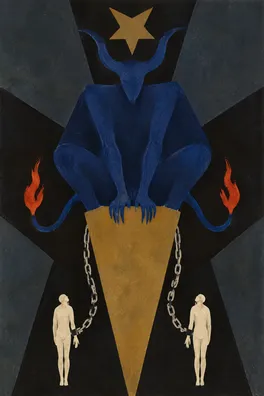
The Devil
Reversed
The Devil reversed, in A small next step, emphasizes recognizing constraints and gradually recovering autonomy. In the context of home, the loosening pattern might be automatic agreement, dependence on another person’s approval or the belief that belonging must be earned through constant usefulness. The next step is to protect a small freedom that has already begun to feel possible.
You might reserve a short period that belongs to you, decline an optional household role or stop offering an explanation for every ordinary preference. Make the change concrete and proportionate to your circumstances. Arrange support: a reminder in your calendar, a conversation with someone you trust, or an agreed division of a shared task. Autonomy becomes easier to sustain when it has practical backing.
A reversed card does not imply that every constraint can be removed at once. Money, space and responsibilities may limit your options, and dependence is not a personal failure. The useful distinction is between necessary interdependence and a habit that leaves no room for your choices. Notice whether the small change gives you more capacity to participate freely, and revise its form if it creates a burden you cannot yet manage.
The World offers a sense of arrival, but Justice reversed asks whether the terms of belonging are fair. The Devil reversed then makes the response gradual and practical: preserve connection while making room for a choice that has been crowded out. A home can contain real comfort and an unequal arrangement at the same time. Recognizing one does not require denying the other.
If the issue is mainly your own unfinished sense of arrival, completing a small task and recognizing existing support may help. If the issue is a repeated imbalance between people, decoration or private gratitude will not resolve the division of responsibility. The reading asks you to distinguish those situations through observation and conversation. You are allowed to revise your explanation as new facts emerge.
For the next week, complete one settling task, record one concrete imbalance and try one manageable boundary or renegotiated responsibility. Keep the scope small enough to observe its effect. Did you gain rest, clarity or a more willing connection? If the agreement remains vague, make it more specific; if you discover an overlooked contribution, update your account of fairness. What would help you feel that you belong without having to surrender an ordinary part of yourself?
A question to take with you
Which condition have I attached to feeling at home, and is that condition fair to my actual needs and circumstances?
Group 3
Group 3
Friendship
How can I bring more care and reciprocity to my friendships?
01Where you are

Nine of Cups
Upright
The Nine of Cups upright, in Where you are, begins with personal satisfaction and the pleasure of what you already have. In friendship, this may be the ease of a familiar conversation, a shared joke or the knowledge that someone enjoys your company. Before turning relationships into another area to improve, let a real source of enjoyment register. Appreciation can make care more specific.
Notice whether you value a friendship for how it feels when you are together or for how it appears from outside. A busy calendar can look enviable while leaving you unsatisfied; a quieter connection may be deeply nourishing. The card’s focus on your own fulfillment gives useful information, but it does not tell you how the other person is experiencing the friendship.
Savor one small good thing without immediately planning the next event. You could send a simple acknowledgment of a moment you enjoyed, leaving room for a response without demanding one. The blind spot is making your contentment the whole measure of reciprocity. Once you have noticed what feels good to you, remain curious about whether the form of contact also makes room for the other person.
02What needs attention
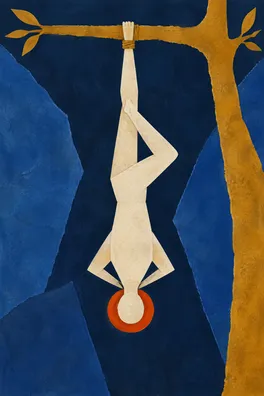
The Hanged Man
Upright
The Hanged Man upright, in What needs attention, asks for a voluntary pause and another perspective. If an invitation has gone unanswered or the rhythm of contact has changed, the impulse may be to force clarity through repeated messages. A pause can interrupt the habit of turning an unresolved moment into a complete explanation of the friendship.
Try describing the situation from the other person’s position using only what you know. Perhaps their schedule has changed; perhaps the kind of contact you offer is difficult for them. Those possibilities are questions, not conclusions about their feelings. Another perspective may also reveal your own need more clearly: you may miss predictability rather than frequency, or want a direct answer rather than constant availability.
Give the pause a purpose and a reasonable review point. After allowing some space, you might ask what kind of contact works for both of you. The card’s sacrifice is letting go of the demand to resolve uncertainty immediately, not erasing your needs. If waiting repeatedly replaces an honest conversation, the pause has begun to serve avoidance. Notice that difference before calling indefinite silence patience.
03A small next step

Eight of Cups
Upright
The Eight of Cups upright, in A small next step, considers leaving a pattern that no longer brings fulfillment in search of something more meaningful. Beside the appreciation of the Nine of Cups, this is nuanced: a friendship can hold genuine pleasure while one recurring way of relating has become empty. The departure may be from a role, a venue or an expectation rather than from the person.
You might stop arranging every meeting around an activity you dislike, step back from always being the organizer, or seek a quieter conversation than the group setting allows. Write down what you want to leave and the value you want to approach. Then try a small adjustment that makes the difference visible, such as offering one kind of invitation you would actually enjoy.
Past effort need not become worthless because your needs change. Equally, disappointment after one difficult week does not establish that the whole relationship has run its course. If a mismatch persists after clear attempts to understand it, more distance may deserve consideration. Let the next step reflect what you have observed and communicated, rather than use withdrawal as a test designed to make someone chase you.
This reading holds satisfaction, uncertainty and departure together. The Nine of Cups asks you to appreciate what is present; The Hanged Man slows the rush to explain what is missing; the Eight of Cups allows a change when the current pattern no longer fits. Gratitude need not make you stay with every arrangement, and disappointment need not erase everything you have enjoyed.
Reciprocity becomes easier to understand when you separate the person from the pattern. You may both care, yet have different capacities or preferences for contact. A new form could help. Alternatively, a persistent lack of room for your needs may not be resolved by becoming more accommodating. The pause helps you gather enough understanding to distinguish these possibilities without pretending to know another person’s intentions.
During the coming week, name one moment of real pleasure, allow a deliberate pause where you usually seek instant reassurance, and offer one clear request about the way you connect. Observe the response over a suitable period rather than counting messages as a score. If your request is unclear, revise it; if the mismatch remains, consider what degree of contact feels honest and sustainable. What would caring for this friendship look like if your own fulfillment and the other person’s freedom both had a place?
A question to take with you
What do I want to leave behind in the way I relate, and what kind of connection would I like that change to make possible?