
Pick a group
Pick a group: care, belonging and a steadier trust in yourself
Choose the question that meets you today: renewing reciprocity in friendship, making home more supportive, or learning to hear your own judgment through strain and self-doubt.
· AI-assisted readings from randomly drawn cards. For reflection and entertainment.
Take a breath. Pick the group that draws you in.
Group 1
Group 1
Friendship
How can I bring more care and reciprocity to my friendships?
01Where you are

Four of Cups
Reversed
The Four of Cups reversed describes a return of interest after withdrawal or weariness. In the position of where you are, it suggests that a small opening toward friendship may matter more than a dramatic social reset. Perhaps a message you once lacked energy to answer now feels possible, or a familiar invitation looks different after a difficult period. This is a conditional picture of renewed receptivity, not a claim that you have been neglectful or that anyone is waiting for you.
Re-engagement can begin with one honest, limited gesture: replying to a friend, suggesting a short walk, or acknowledging that you have been quiet. Let the size of the invitation match your available energy. Notice whether the contact leaves you more connected, neutral or depleted; that information can guide the next step. Openness need not mean returning to every old pattern. If withdrawal protected a necessary boundary, renewed care may mean choosing a safer form of contact rather than abandoning that boundary.
02What needs attention

Death
Upright
Death upright puts an ending or transformation where attention is needed. In a friendship reading, it can refer to an old role, expectation or habit reaching its limit; it does not require the friendship itself to end. You may no longer be able to organize every meeting, provide unlimited reassurance or keep a bond alive through shared complaints. Care sometimes becomes more reciprocal only after an arrangement that once felt normal is allowed to change.
Choose one pattern to name without turning it into a verdict on the other person. You might explain that you value the connection and would welcome them initiating the next meeting, or that a previous weekly routine no longer fits. Leave room for their circumstances and their answer. A friend may be under strain rather than indifferent, but strain does not make your needs disappear. What matters is whether both of you can acknowledge the change and find a workable form, rather than preserving familiarity at any cost.
03A small next step
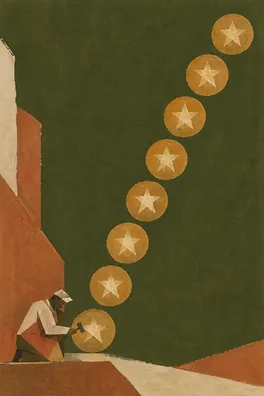
Eight of Pentacles
Reversed
The Eight of Pentacles reversed makes the small next step a question of effort and quality. Its range includes carelessness and low motivation, but also perfectionism that makes useful action harder. In friendship, you could spend so long composing the perfect message that no invitation arrives, or offer automatic check-ins without noticing what your friend actually says. More effort is not always the missing ingredient; a better fit between effort and purpose may be.
Try one bounded practice: send a simple, specific invitation, then give the other person room to respond. Ask a trusted friend what kind of contact feels supportive, rather than assuming your preferred form is universal. Set a stopping point so you do not repeatedly revise or follow up from anxiety. Reciprocity is best observed across time and circumstances, not scored message by message. If the response reveals an enduring mismatch, that is information for a conversation, not proof that either person has failed at friendship.
This group moves from looking up again, through letting an old form end, toward a less strained way of practicing care. The reversed Four of Cups offers an opening; Death asks what cannot simply resume unchanged; the reversed Eight of Pentacles questions whether overwork or inattention is blocking the connection you want. Together they support a renewed friendship with revised expectations, while leaving open the possibility that a particular bond needs more distance.
Over the next week, choose one friendship and one manageable act of contact. Before sending it, name a pattern you are ready to stop, such as always hiding your limits or assuming silence means rejection. Afterwards, record what actually happened and what you inferred. Allow for a delayed reply and different communication styles, then look for a broader willingness to meet each other. If the experiment increases resentment, reduce the demand and consider a direct conversation about needs rather than adding more invisible effort.
Care becomes easier to assess when it is concrete: a kept plan, a respectful answer, an invitation initiated by someone else, or a limit received without punishment. Those details will not produce a perfect balance every week, but they can reveal whether the relationship has room to evolve. What could end in the way you maintain this friendship so that something more mutual can begin?
A question to take with you
Which old friendship role am I ready to release, and what modest act of care would let me observe reciprocity without keeping score?
Group 2
Group 2
Home and belonging
What would make my sense of home feel more supportive?
01Where you are

Ace of Wands
Upright
The Ace of Wands upright places a fresh spark where you are. A wish to rearrange a corner, establish a welcoming ritual or invite someone into your space may be the beginning of a more supportive home. The card describes desire and creative possibility before the details are settled. You do not need to know the final shape to notice what draws you toward it.
Give the spark fifteen minutes in a small first version. Clear a place to sit, try a quieter evening routine or sketch how a shared room could work better. Then notice the effect on daily life rather than judging the result as a finished design. If you share your home, ask before changing something another person relies on. A burst of inspiration can reveal a need, but it can also temporarily distract from an unresolved practical problem; let the experiment help you distinguish the two.
02What needs attention

Ace of Pentacles
Upright
The Ace of Pentacles upright directs attention to the material conditions that let a beginning grow. Belonging may involve warmth and connection, yet it also depends on resources, predictable costs, time and access. An appealing idea becomes more supportive when it can survive ordinary use. A comfortable corner still needs a workable space; a shared ritual needs a time that household members can actually keep.
List the resources your preferred change requires and the costs it creates, including maintenance and effort as well as money. Look first for an available resource: something you already own, a practical conversation with a housemate, or a local service whose terms you can check. The seed is an opportunity, not a guarantee of stability. If the larger change is unaffordable, identify the smallest version that addresses the underlying need, while acknowledging that some housing difficulties require outside support rather than personal creativity alone.
03A small next step

Eight of Cups
Reversed
The Eight of Cups reversed makes the next step a careful review of staying, leaving or returning. In this position, hesitation may contain both fear of loss and useful knowledge about real constraints. Perhaps you are unsure whether to move, alter a household arrangement or stop seeking belonging in a place that repeatedly disappoints you. The card does not settle that choice, and uncertainty does not make you weak.
Set a date to revisit one decision and gather one concrete missing piece beforehand: an actual cost, a transport option, a household member’s preference or the conditions of an alternative space. Separate what makes you want to stay from what makes leaving difficult. A return can be restorative when something material has changed; it can also repeat an unresolved pattern. If safety is a concern, prioritize appropriate local support over an experiment in endurance. The useful small step is obtaining better footing for your choice, not forcing an immediate departure or reconciliation.
Two upright Aces bring creative energy and a tangible beginning, while the reversed Eight of Cups asks whether that beginning belongs inside your current arrangement or somewhere else. The cards do not imply that buying something or moving will automatically create belonging. They suggest testing the connection between a felt need, a practical resource and the freedom to reconsider your situation.
This week, choose a need you can describe plainly, such as rest, privacy or more welcoming contact. Make one small change with resources you can comfortably access, and keep a short note on when it helps and when it does not. At the same time, gather the missing information for a larger unresolved choice. Review both at the date you set: has the experiment made the current home more workable, or shown a limit that a small adjustment cannot address? Either result can be useful.
If the obstacle is mainly a routine, iteration may help. If it is an enduring conflict of needs or a resource shortage, the next step may be a negotiated arrangement or outside assistance. Let practical evidence refine the original spark without dismissing your longing for support. What would help you choose from care for your needs rather than from either momentary excitement or fear of loss?
A question to take with you
What small, affordable change could test my idea of a supportive home, and what information would make a larger stay-or-leave decision clearer?
Group 3
Group 3
Trusting yourself
What can help me listen to my own judgment?
01Where you are

Five of Pentacles
Upright
The Five of Pentacles upright acknowledges strain, scarcity or exclusion where you are. When resources or support feel uncertain, self-trust can become harder because every mistake seems costly. You may interpret needing help as evidence that your judgment is poor, even though difficult circumstances can overwhelm a capable person. This card invites recognition of the burden without pretending to know your financial situation.
Identify the most immediate condition that needs attention and one specific channel of support you can check. That might be a person who can explain an option, a community resource or an office responsible for the issue. Confirm availability rather than assuming help exists or is easy to access. Asking a focused question can itself be an act of judgment. If a channel is unhelpful, that tells you something about the channel; it does not establish that your need is illegitimate or that you must manage alone.
02What needs attention

Judgement
Reversed
Judgement reversed places self-doubt and harsh criticism where attention is needed. Its meaning includes failing to learn from experience, but learning requires a specific account of what happened. A sweeping sentence such as “I always get this wrong” supplies punishment instead of usable feedback. Under the strain described by the first card, that voice may sound protective because it promises to prevent another mistake, while actually making every choice feel unsafe.
Take one self-condemning statement and translate it into a change you can observe. “I should have known” could become “Before agreeing next time, I will ask what the commitment costs and when an answer is needed.” Consider the information you had at the time, what was outside your control and what you can now do differently. The alternative blind spot is dismissing all criticism as unfair. Keep feedback that identifies a behavior you can change, and set aside claims that reduce your whole character to one outcome.
03A small next step

Page of Pentacles
Upright
The Page of Pentacles upright offers serious learning as the small next step. Self-trust can develop through a practical beginning rather than through waiting to feel certain. The Page is willing to use basic tools, ask a simple question and complete a modest task. In this position, that approach gives you evidence about your process without asking one decision to prove your worth.
Choose a foundational skill related to the choice in front of you: comparing written terms, making a realistic schedule or checking the source of a claim. Complete one small exercise and note how you checked the result. If you ask for guidance, request an explanation you can apply independently next time. Starting small should make learning possible, not become a permanent excuse to avoid a necessary decision. Set a review point at which you will use what you have learned, while allowing appropriate help for the parts beyond your current knowledge.
This group links external strain, an internal judging voice and a concrete learning practice. The Five of Pentacles asks what support is missing; Judgement reversed asks whether reflection has become condemnation; the Page of Pentacles makes confidence something you can build through observable steps. The sequence does not promise that good habits erase material hardship. It suggests that seeking support and improving your method can coexist with trusting yourself.
For the coming week, choose one ordinary decision with consequences you can manage. Write what you need to know, obtain one relevant fact and complete one small preparatory task. Make the choice within a reasonable time, then review the process separately from the outcome. Was the information sound? Did you account for your constraints? What would you repeat or change? A disappointing result can still follow a thoughtful process; a lucky result can follow a weak one. That distinction helps feedback become useful.
If the exercise becomes another scorecard for self-criticism, make the task smaller and include what you did competently. If the real barrier is a missing resource, direct effort toward getting support rather than demanding greater willpower. Self-trust need not mean having the answer alone; it can mean recognizing what you know, what you need to learn and whom you can ask. What evidence of your own care and practical judgment have you been overlooking?
A question to take with you
What specific support or skill would make my next choice more informed, and how can I evaluate my process without turning the outcome into a verdict on myself?