
Pick a group
Pick a group: a clear next step for the chapter you are living
An unfinished chapter, friendship, or a change of season: choose the question that meets you today and explore a practical way forward without forcing certainty.
· AI-assisted readings from randomly drawn cards. For reflection and entertainment.
Take a breath. Pick the group that draws you in.
Group 1
Group 1
An unfinished chapter
How can I approach something I have left unfinished?
01Where you are

Eight of Wands
Reversed
The Eight of Wands reversed suggests that the unfinished chapter may involve disrupted timing as much as a lack of motivation. Its meaning includes delayed messages, scattered momentum and confusion created by haste. In the position of where you are, it invites you to inspect the route between intention and completion. A task can feel emotionally enormous when its actual obstacle is an unanswered question, an unclear handoff or three contradictory versions of what was agreed.
Perhaps you have stopped returning to a creative project because feedback arrived out of order, or an administrative task remains open because everyone assumes someone else owns the next step. These are possibilities to investigate, not explanations to impose on yourself. Impatience can make the tangle worse: sending another vague message or opening another document may create activity without restoring direction. The reversal makes slower coordination a legitimate form of progress.
Gather the relevant notes into one place and state what is unfinished in a single concrete sentence. Identify who can clarify it and what information is actually missing. If no one else is involved, name the decision you have been postponing. A real outside delay may require a review date rather than more effort today. Notice whether this sorting reduces friction or reveals that the project no longer matters in its original form.
02What needs attention

The Hermit
Upright
The Hermit upright asks for quiet discernment in what needs attention. Its search for deeper answers is different from withdrawing until uncertainty disappears. After the scattered energy of the first card, it suggests that completion needs an honest understanding of purpose. You may know how to finish and still need to ask whether you want to finish this version, fulfill one obligation, or consciously bring the chapter to a close.
Set aside ten uninterrupted minutes with one question: what remains worth carrying forward? Write from your own experience before consulting another opinion. If the task has become a symbol of being capable or reliable, separate that identity from the actual promise you made. You might owe someone an update without owing them an indefinitely expanding project. You might also discover a commitment that still matters and needs protected time rather than another burst of enthusiasm.
The Hermit can include guidance from a mentor; independent thought need not mean doing everything alone. Ask one experienced person a specific question after you have named the issue. The blind spot is treating endless introspection as preparation. Quiet has done its work when it gives you a clearer decision or a better question to verify, even if it does not produce complete confidence.
03A small next step

Ace of Swords
Upright
The Ace of Swords upright turns reflection into a clear next step. Its meaning of truth, judgment and a new idea fits a small beginning: you do not need a grand return to the entire unfinished chapter. You need one statement that can survive contact with facts. That might be “I need the missing document before I can proceed,” or “I am willing to complete the short version, but cannot promise the original scope.”
Write the question that most needs an answer, then locate one fact that could resolve it. Open the actual requirements, check the latest agreement, or make a concise request to the person involved. Where the obstacle is internal, define one observable action such as drafting the first paragraph or listing the remaining steps. The point is to replace a cloud of self-criticism with a decision small enough to carry out.
This card also carries the possibility of conflict or forceful expression. Clarity is not a license to cut someone with accumulated frustration. State what you know, acknowledge what you still need, and avoid presenting your first clean explanation as the only possible truth. Afterwards, notice whether the action opened the way or exposed a different obstacle. Either result gives you information for the next step.
This reading moves from disrupted momentum to private discernment and then clear expression. The reversed Eight of Wands says that pushing harder may repeat the original confusion. The Hermit asks which part of the chapter deserves your remaining attention. The Ace of Swords makes that understanding usable through a fact, a boundary or a direct question. Together they suggest a restart based on definition, rather than a promise to become a different person overnight.
There is another possible reading: the task may be perfectly clear, while you are avoiding the discomfort of finding out what happens when you complete it. In that case, further organizing will offer diminishing returns. The useful experiment is still small. This week, choose one unfinished item, give it ten quiet minutes, and produce a single sentence describing what “done” now means. Then take one action that can verify or advance that definition.
At the end of the week, review what changed. If an external dependency is still missing, document it and choose a reasonable time to check again. If the work has lost its purpose, consider a responsible closure that includes any necessary communication. If the first step rekindled interest, reserve a modest next session. You are looking for a relationship to unfinished work that combines honesty with follow-through, instead of allowing every open loop to become a verdict on your character.
A question to take with you
What one fact or clear sentence would help me decide whether to continue, revise or consciously close this unfinished chapter?
Group 2
Group 2
Friendship
How can I bring more care and reciprocity to my friendships?
01Where you are
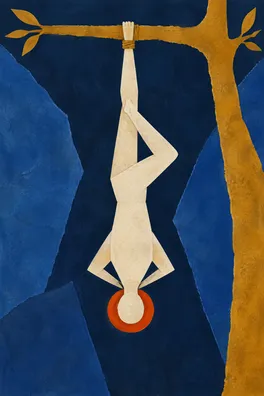
The Hanged Man
Upright
The Hanged Man upright places a pause at the center of where you are. Its existing meaning concerns an unresolved phase, releasing an old stance and seeing from another perspective. In friendship, this can describe the uncomfortable space between noticing an imbalance and knowing what it means. A slower reply or a canceled plan may bring up hurt, but the card does not reveal the other person’s motive.
Try describing one recent interaction from your friend’s possible point of view, clearly marking what you do not know. They may be overwhelmed, or the friendship may have fallen into a pattern in which you carry too much of the organizing. Perspective can broaden the question without canceling your experience. Care includes curiosity about another person and an accurate account of what continued effort costs you.
The practical pause is bounded: let yourself observe before sending a message designed to force reassurance, then decide when to talk. Voluntary waiting can make a conversation kinder. Waiting indefinitely because asking feels risky can keep a painful pattern intact. Notice whether the pause brings new understanding or simply postpones naming a need. You can release a rigid interpretation while still asking for something specific.
02What needs attention
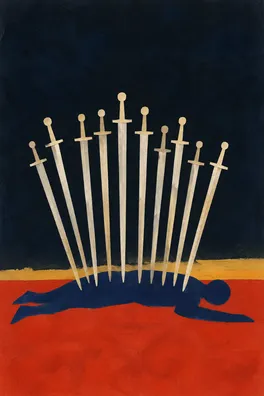
Ten of Swords
Reversed
The Ten of Swords reversed brings recovery into what needs attention. Its central movement is rising after a low point, with old pain sometimes slowing the return. In friendship, a present disappointment can touch an earlier experience of being excluded, overused or left without explanation. This possibility calls for tenderness and precision; it does not mean your current concern is merely an echo or that an old hurt explains everything.
Name the behavior you do not want to repeat, rather than assigning a permanent role to either person. You might write, “I agree to plans I cannot sustain because I fear losing contact,” or “I avoid speaking until resentment makes me abrupt.” Then choose a boundary you can actually keep. Offering two times you can meet is more workable than promising to stop caring who initiates. Recovery is supported by changed participation, not by a demand that you feel unaffected.
If there has been a genuine breach of trust, repair may require acknowledgment and consistent behavior over time. A hopeful conversation is a beginning, not evidence that the pattern has changed. If no such breach has occurred, consider whether old vigilance is obscuring small signs of care. The reversal makes room for a different experience without requiring you to call every ending resolved or to reopen a connection you do not want.
03A small next step

Page of Swords
Reversed
The Page of Swords reversed makes careful communication the small next step. Its meaning includes gossip, unverified claims, empty talk and defensiveness. The useful application is to slow the journey from a fragment of information to a judgment about a friend. A screenshot, someone else’s account, or the tone you hear in a brief message may be incomplete. Suspicion can feel like alertness while steadily reducing the possibility of an honest conversation.
Before passing anything along, check where it came from and whether sharing it serves a real need. If you need clarity, ask about your own experience directly: “When the plan changed and I did not hear, I felt left out. Can we agree how to update each other?” This is more answerable than asking a person to defend their entire loyalty. If a conversation becomes heated, suggest returning when both of you can listen.
The blind spot is using politeness to avoid a necessary question. Careful speech should make truth easier to discuss, not bury it. You can also choose discretion when a detail belongs to someone else or would turn mutual friends into a jury. After the exchange, look for a concrete agreement and later follow-through. A persuasive explanation matters less than whether communication becomes clearer and the effort more reciprocal.
The Hanged Man slows the first interpretation, the reversed Ten of Swords names what is healing, and the reversed Page of Swords asks you to protect that process through accurate speech. Reciprocity here is not a tally of messages. It is the ability to express a need, hear the other person’s circumstances and see whether both people make room for the relationship. A pause is helpful when it makes that exchange possible.
For this week’s experiment, choose one friendship and one manageable point of friction. First write what happened without assigning intent. Then note the older fear or expectation it stirred, if any. Finally make one direct request or offer that respects both schedules and limits. You might propose a shorter call instead of repeatedly arranging an elaborate meeting, or ask for notice when a plan changes. Keep the discussion between the people involved wherever possible.
Review the response over time rather than grading a single sentence. If your friend participates imperfectly but sincerely, a modest adjustment may be enough. If the same disregard continues after clear requests, you may need a firmer boundary around your own effort. If your assumption proves mistaken, let the new information matter. The reading leaves room for repair, changed expectations or greater distance; its common thread is care that remains truthful about what each person can offer.
A question to take with you
What do I need to ask directly, and what old story or unverified assumption could I set down before that conversation?
Group 3
Group 3
A change of season
How can I meet a transition with more steadiness?
01Where you are

The Emperor
Reversed
The Emperor reversed describes where an old structure may no longer support a changing situation. Its meaning includes excessive control and rigid rules, but also ineffective leadership or insufficient discipline. Those possibilities point in different directions. During a transition, you may be trying to preserve every former routine, or you may have lost the simple framework that once helped you begin the day. The task is to identify which problem is actually present.
Consider a change in work, home responsibilities or the rhythm of a relationship. A rule that once protected your time may now demand more than circumstances allow. Alternatively, saying “I need flexibility” may have left important responsibilities without an owner. Neither possibility makes you a failure. A structure earns its place by supporting real needs and allowing the people affected to understand what they can count on.
Choose one rule to inspect: who does it help, what does it cost, and what happens when it is not followed? If others are affected, agree on an adjustment instead of silently changing the terms. Keep the smallest useful anchor, such as a brief planning check-in, and loosen what has become performative control. Afterwards, notice whether you have gained steadiness or merely transferred uncertainty to someone else.
02What needs attention
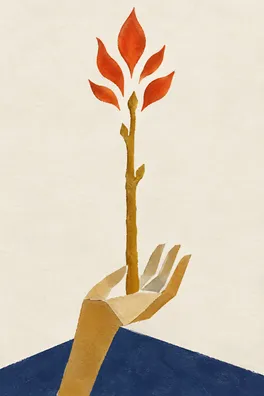
Ace of Wands
Upright
The Ace of Wands upright brings a fresh spark into what needs attention. It can signify creativity, opportunity or desire to begin. Beside the reversed Emperor, the spark asks for room within the new structure. A transition is not only a problem to organize; it may reveal an interest that the previous season left little space to explore. Enthusiasm can be informative even before it becomes a plan.
Perhaps you want to learn a skill, rearrange a corner of your home or return to a neglected creative practice. Spend fifteen minutes making a small first version. Sketch the idea, try the opening exercise or arrange one shelf. Keep it small enough that the result can teach you something without demanding an immediate commitment. The aim is to discover which part of the possibility feels alive in actual practice.
A spark does not guarantee lasting energy, and it need not compensate for every loss involved in change. You can feel interested and unsettled at once. The blind spot is using a new project to outrun the responsibilities or feelings of the transition. Write what the experiment revealed and what you still need to know. If the activity leaves you curious rather than merely relieved, that is useful information for deciding whether to give it another small space.
03A small next step
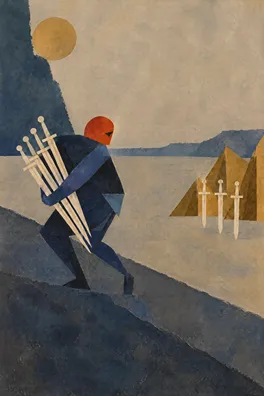
Seven of Swords
Upright
The Seven of Swords upright makes strategy and concealed information part of the small next step. Its meaning includes deception and evading responsibility, alongside the possible need for discretion. This is not permission to assume someone is hiding something, nor an instruction to maneuver around them. In a transition, the useful question is whether your plan contains an unspoken fact that another person needs in order to make an informed choice.
Before you commit to the new arrangement, check one hidden dependency: time borrowed from a shared obligation, a cost that has not been discussed, or a responsibility that has no clear owner. You may also need a legitimate private space to develop an idea before it is ready for a wider audience. Distinguish privacy from concealment by asking who bears the consequences of not knowing. A boundary can protect exploration without misrepresenting an agreement.
Choose a strategy you could explain honestly to the people affected. Clarify what you are keeping private, what requires consent and when you will revisit the plan. If greater openness would create a real problem, think carefully about the audience and timing rather than making disclosure an automatic rule. The practical measure is whether discretion preserves a fair boundary or quietly makes someone else carry a risk they never accepted.
This group brings structure, vitality and accountability into the same transition. The reversed Emperor asks whether the old system is too tight or no longer effective. The Ace of Wands supplies a reason to make space for something new. The Seven of Swords challenges any tempting shortcut that would hide the cost of that space. Steadiness comes from a workable arrangement whose obligations you can describe, rather than total control of how the next season unfolds.
Try a one-week experiment with one revised routine and one small creative opening. Tell anyone affected what is changing, including the part you are not yet ready to decide. Give the new activity fifteen minutes and track its actual effect on time and energy. Then check one practical dependency before expanding it. This lets inspiration inform your plans while keeping the consequences visible.
If the week becomes chaotic, you may need a clearer anchor rather than more rules everywhere. If the arrangement feels orderly but lifeless, loosen one restriction that no longer protects anything essential. If the plan works only because someone else absorbs an undisclosed burden, renegotiate it. Some parts of change need private thought and gradual timing; others need an explicit agreement now. You do not have to resolve the whole season to take a first step that is both hopeful and fair.
A question to take with you
Which structure would support this new season, and what fact or responsibility needs to be made clear before I ask it to grow?