
Pick a group
A little more room to choose, begin and belong
Choose the group that draws your attention: clarify a direction, find a realistic next step, or make home feel more supportive. Let the reading help you notice what your circumstances actually need.
· AI-assisted readings from randomly drawn cards. For reflection and entertainment.
Take a breath. Pick the group that draws you in.
Group 1
Group 1
Choosing a direction
What can help me clarify a choice without rushing?
01Where you are
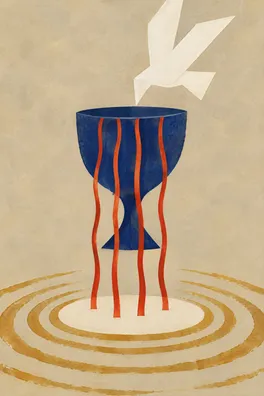
Ace of Cups
Reversed
The reversed Ace of Cups in Where you are suggests that a choice may be hard to hear through feelings that have not found expression. There may be disappointment about an option you wanted, a response that never arrived, or creative energy that has gone quiet. This does not mean you have no preferences. It may mean that comparing alternatives before acknowledging the emotional cost makes every option feel strangely empty.
For example, a person considering a new role might keep comparing titles while still grieving the recognition they hoped to receive in the present one. Someone choosing a course could feel numb because an earlier attempt ended painfully. These are possible situations, not conclusions about your life. If your hesitation comes from missing practical information instead, a factual inquiry may help more than further emotional analysis.
Give one feeling a plain sentence without demanding a solution: I am disappointed that this did not happen, or I wanted a different response. Let that statement stand before you ask what comes next. You need not make another person validate it or force yourself into enthusiasm. Notice whether acknowledging the loss reveals a small preference, or simply shows that you need more room before deciding.
02What needs attention

The Tower
Reversed
The reversed Tower in What needs attention brings the difference between preventing damage and postponing necessary change into focus. Its meaning allows for an averted crisis or reduced impact, so caution may already be serving you well. It also asks whether apparent calm depends on avoiding a problem that will remain regardless of which option you choose. The position invites examination of one unstable element, not an assumption that everything must collapse.
You might be delaying a conversation about workload because the present arrangement seems tolerable for another week. Alternatively, you may have made a practical repair that genuinely gives you time to choose carefully. Distinguish these possibilities by looking at what changed: has the source of strain been addressed, or has the cost merely moved onto your sleep, attention or someone else’s labor?
Check one visible problem and make a proportionate repair. Clarify a deadline, confirm a shared responsibility or prepare a fallback for an option that may not be available. A contingency can reduce the pressure to make a dramatic choice simply to escape uncertainty. If you discover that the current structure works with a modest adjustment, allow that evidence to matter too; change is not automatically wiser because it is larger.
03A small next step
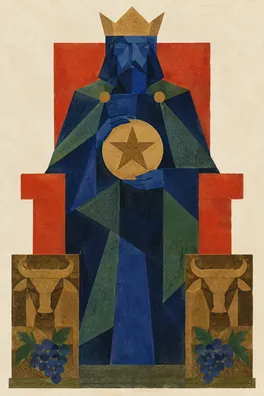
King of Pentacles
Reversed
The reversed King of Pentacles in A small next step asks you to examine how resources and status influence the decision. His existing meaning concerns control, waste and management that loses sight of responsibility. In this position, the useful response is a small audit of the arrangement, rather than an attempt to embody a more forceful authority. What looks successful on paper may be expensive in upkeep, flexibility or trust.
If an appealing option requires constant availability, include that demand beside its visible rewards. If you share money, space or caregiving, consider who will maintain the choice after the initial excitement passes. A wish for security is not inherently greedy or controlling; it can be sensible. The blind spot is treating the most impressive outcome as automatically the most stable one.
Compare two options using the same practical questions: what does each require, who carries the ongoing work, and what remains available for the rest of life? Begin with one missing detail you can verify, such as the true weekly commitment. Avoid making a new budget or schedule so elaborate that it becomes another way to postpone the conversation. The next step is to improve the decision’s terms, not to force certainty.
This group moves from an unexpressed feeling, through the structure that may be preserving uncertainty, toward the way resources are being managed. The reversed Ace of Cups suggests that an honest preference may emerge only after disappointment has room to exist. The reversed Tower asks whether waiting is protective or merely costly. The reversed King of Pentacles brings the choice back to what it will ask of your time, relationships and practical capacity.
Together, the cards suggest separating three questions that can otherwise become tangled: what do I feel, what actually needs repair, and what can I sustain? You may not need to answer all three today. If the problem is primarily logistical, the emotional reading may fit less well; let concrete constraints take priority. If the options are practically similar, the feeling you keep editing out may deserve more attention.
This week, use one short session to name the disappointment, a second to check a visible structural problem, and a third to obtain one practical detail about your leading options. Choose a realistic review date instead of revisiting the decision every hour. If a genuine deadline makes that pace impossible, shorten the process and ask for the most consequential missing information first. Reflect on whether the new detail changes your preference or merely reduces the fear around it.
A question to take with you
What would become clearer if I stopped asking this choice to repair an old disappointment and instead examined what each option can realistically support?
Group 2
Group 2
Your next small step
Where could one small, realistic step make a difference?
01Where you are
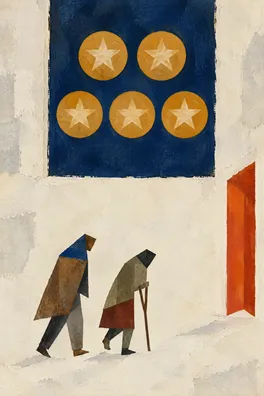
Five of Pentacles
Upright
The upright Five of Pentacles in Where you are starts with a real limit: a shortage of money, time, access or support may be narrowing your choices. Its meaning includes exclusion and the difficulty of reaching help, even when help exists. The position asks you to recognize the practical condition before turning it into a judgment about your character. Feeling alone can make an already demanding task feel impossible to begin.
Perhaps a bill, a broken device or a transport problem has become the point around which everything else stalls. Perhaps the scarcity is not financial, but the absence of someone who can share an essential responsibility. A small action must meet that actual constraint. Adding a new productivity routine is unlikely to help if the missing condition is access to a service or a reliable hour of assistance.
Name the essential need most pressing today and identify a specific support channel: a relevant service desk, a community resource, or a trusted person who could help with a defined task. Check availability and requirements rather than assuming access. If the first route is closed or unsuitable, that is information about the route, not evidence that you do not deserve support. A realistic next step may simply be finding the correct contact.
02What needs attention

Temperance
Upright
Upright Temperance in What needs attention asks how different needs can fit into a sustainable pace. Its moderation is active integration, not passive waiting for life to settle. When resources are thin, an intense push can feel like the only serious response. Yet a plan that consumes tomorrow’s capacity may recreate the same shortage immediately after today’s brief success.
Consider a task that requires both concentration and an uncomfortable call. You might make the call first, then complete one manageable piece of follow-up rather than trying to clear every overdue item. If you have only a narrow window, the adjustment may be to reduce the task’s scope. Balance is not equal time for everything; it is enough attention to the essential parts for the whole process to continue.
Set the length of one work session and a real break before beginning. Include the transition time that your ideal schedule usually ignores. Afterwards, notice whether you retained enough energy for the next necessary activity. If the problem is urgent, moderation may mean obtaining help quickly and postponing less essential work, rather than slowing down the essential response. Let the pace serve the situation.
03A small next step
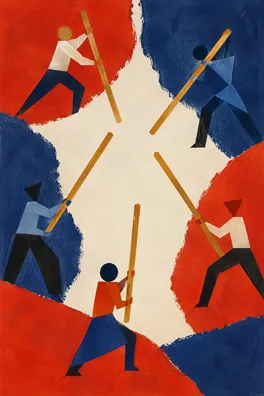
Five of Wands
Reversed
The reversed Five of Wands in A small next step suggests that reducing friction could free more energy than pushing harder. Its meaning allows for easing tension, leaving an unhelpful contest or reaching a compromise. It also warns that a quiet surface may conceal an argument nobody has been willing to name. The next step is therefore a specific discussion, not a general promise to avoid conflict.
If several people share a responsibility, repeated debate about who cares more may obscure a solvable question about timing or ownership. Ask who can complete which part by when. If the competition exists mainly in your own comparisons with others, stepping away from that contest could make your actual task smaller. A conversation is useful only when it addresses the real source of friction.
Turn one complaint into a question that admits a practical answer: can we agree on one handover time, or which task can be postponed? Listen for what the other person can actually offer. Compromise need not require you to accept an unfair burden. If the apparent peace depends on your doing everything, name that imbalance and seek a workable boundary instead of calling silence a solution.
This group begins by honoring a material or practical shortage, then asks for a pace and an agreement that make support usable. The Five of Pentacles recognizes the need; Temperance integrates help with available capacity; the reversed Five of Wands looks for friction that can be reduced or honestly discussed. The useful step may be much smaller than the problem, yet still change the conditions under which you face it.
There is a tension between reaching outward and conserving effort. Asking for help can involve paperwork, uncertainty or a conversation you would rather avoid. That does not make it the wrong step, but it means the plan should include the effort of asking. If no suitable support is available, do not pretend that patience alone resolves scarcity. Shift the experiment toward locating another route or renegotiating the immediate demand.
For the coming week, choose one essential need, make one specific inquiry and reserve a bounded period for the next action it enables. Where another person is involved, settle one practical question rather than the entire history of disagreement. Review what changed: did you gain access, reduce a barrier, or learn that the route needs replacing? Adjust after that evidence. Progress can include a clearer understanding of the constraint, without requiring you to celebrate hardship.
A question to take with you
Which essential condition would become easier to meet if I asked for one precise form of support and stopped spending energy on an unhelpful contest?
Group 3
Group 3
Home and belonging
What would make my sense of home feel more supportive?
01Where you are

Knight of Pentacles
Reversed
The reversed Knight of Pentacles in Where you are suggests that a familiar routine may have stopped providing the support it once offered. His meaning includes stagnation, stubbornness and effort that produces little. In a home reading, that can point to a process maintained because it is established, even when it now consumes more care than it returns. Familiarity can feel safe while quietly making daily life harder.
You might spend a long time maintaining an elaborate system that nobody uses, or wait for the ideal weekend before addressing a small recurring inconvenience. These patterns can come from fatigue or excessive caution as readily as avoidance. Before attaching a harsh label, check whether the routine’s demands fit the people and resources actually available.
Choose one repeated step with poor returns and simplify it once. Move an often-used object where it is needed, reduce an unnecessary standard or clarify who handles a recurring task. Observe the effect before redesigning the whole household. If the existing routine protects an important need, keep that function while changing the burden. The aim is dependable support with less wasted effort.
02What needs attention

The Sun
Reversed
The reversed Sun in What needs attention brings obscured joy and diminished confidence into view. It need not mean the home has failed. There may be good things that are hard to enjoy because an unfinished task, comparison or demand to stay positive takes up all the light. This position asks what prevents you from experiencing support that may already be present, while leaving room for genuine shortcomings.
Perhaps you avoid inviting someone over until the space looks perfect, or dismiss a peaceful evening because it did not resemble an ideal family scene. Alternatively, the lack of joy may point to an unmet need for privacy, welcome or shared effort. Forced gratitude would hide that distinction. Acknowledge what is working and inspect one detail that optimism or perfectionism has obscured.
Name a small piece of real progress without adding an immediate criticism. Then ask what would make an ordinary day easier to inhabit. A practical adjustment and a moment of enjoyment can coexist. If the setting is not supportive, the next step may involve finding a welcoming place or relationship beyond it; you do not have to persuade yourself to feel at home everywhere.
03A small next step

Four of Wands
Upright
The upright Four of Wands in A small next step offers belonging through a stable foundation and shared recognition. Its celebration need not be a large event or proof of a perfect household. In this position, a modest ritual can make support visible: a moment when people know they are welcome and a small achievement is allowed to count. Repetition can give that moment more substance than expense or spectacle.
You might mark the completion of a difficult week with a simple meal, thank someone for a contribution that usually goes unnoticed, or set aside a shared pause with a trusted friend. Home can include chosen relationships and places beyond a family address. If you live alone, a ritual can still connect you to a person or community you want to keep in your life.
Choose something affordable in attention as well as money, and invite participation without making it an obligation. Ask what form feels comfortable to those involved. A ritual should not create another task for the person already carrying the household. If it feels performative or excludes someone’s needs, simplify it or find a different expression of welcome. The foundation is mutual support, not an appearance of togetherness.
The reversed Knight of Pentacles asks where reliability has become inertia; the reversed Sun asks where confidence or enjoyment has dimmed; the upright Four of Wands offers a small, shared expression of belonging. The movement is from maintenance that may be exhausting, through honest attention to how home feels, toward a foundation people can actually experience. A more supportive home need not begin with a major project.
These cards also challenge two easy assumptions: that a well-maintained space necessarily feels welcoming, and that a pleasant gathering fixes an unfair arrangement. If routine work is badly shared, celebration will need practical changes beneath it. If the structure is basically sound but perfectionism keeps postponing connection, a modest ritual may be the more useful intervention. Let the circumstances determine which reading fits.
Over the coming week, simplify one low-return routine, acknowledge one genuine improvement and try one repeatable gesture of welcome. Notice who does the work and how people feel afterwards. If the gesture adds pressure, reduce its scale or ask others to shape it. If the routine change removes a real burden, preserve that gain before adding anything else. Reflect on what makes it easier to arrive, participate and remain yourself.
A question to take with you
What small change would make belonging easier to experience in ordinary life, and who needs a voice in shaping it?