
Pick a group
Care, appreciation and small beginnings: choose a group
Choose the question that meets you today: reciprocal friendship, appreciation that leaves room for disappointment, or a small habit practiced with less harshness.
· AI-assisted readings from randomly drawn cards. For reflection and entertainment.
Take a breath. Pick the group that draws you in.
Group 1
Group 1
Friendship
How can I bring more care and reciprocity to my friendships?
01Where you are

Knight of Pentacles
Upright
The upright Knight of Pentacles in Where you are places care in reliable, practical action. Friendship may currently be expressed through remembering a detail, arranging transport, keeping a promise or checking in after a difficult week. Such gestures can seem ordinary precisely because they are dependable. The card invites you to recognize what steady attention has already built instead of measuring closeness only by dramatic conversations or frequent contact.
Reliability can also become an unspoken job. If you always arrange the meeting, you may feel that stopping would reveal whether anyone else cares. That feeling is understandable, but a silent test makes the evidence hard to read: friends may have assumed that organizing is something you enjoy. Start with an observable pattern and a clear request, such as asking another person to choose the next date. Their response gives more usable information than guessing at their motives.
Attend to one overlooked part of the friendship routine, then check whether the commitment remains manageable. A regular message may be sustainable where a weekly long call is not. The alternative interpretation is that the routine has become too rigid; a reliable bond can allow changes without losing its value. Notice whether the adjustment leaves room for both people’s circumstances and whether care can take forms other than your preferred one.
02What needs attention

The World
Upright
The upright World in What needs attention asks you to recognize a cycle and integrate what it has taught you. In friendship, completion need not mean an ending. It may mean acknowledging that a shared project, a period of studying together or an intense season of mutual support has finished. A bond can feel oddly unfinished when neither person has named the change, even though both are ready for a different rhythm.
You might have a friend who now lives far away, or a group that keeps trying to reproduce an earlier stage of life. Rather than assuming the present is a poor copy of the past, identify what made that chapter meaningful: companionship, honest conversation, a sense of belonging. Some of those qualities can travel into a new arrangement even when the old schedule cannot. The World’s wider horizon also invites interest in the life your friend has beyond your shared circle.
Finish one small unfinished gesture: send the promised photograph, acknowledge help you received, or bring a lingering plan to a clear conclusion. Then name what you want to carry forward. Avoid forcing a neat ending where feelings are still complicated. Integration may include accepting an unresolved difference while choosing a workable way to remain connected; it does not require declaring that every aspect of the friendship is complete.
03A small next step

The Devil
Reversed
The reversed Devil in A small next step suggests noticing a constraint that is loosening and protecting the autonomy that follows. A friendship may become more reciprocal when care stops being tied to guilt, constant availability or an obligation to agree. This card does not establish that anyone is controlling you. It invites you to examine a pattern in which your choices feel narrower than they need to be.
For example, you may be learning that declining a late invitation does not require a long defense, or that you can support a friend without becoming the only person they turn to. State a small boundary warmly and concretely: when you are available, what you can offer and what you cannot take on this week. Arrange support for yourself if you tend to reverse the boundary as soon as someone is disappointed. Autonomy is easier to sustain when it has a practical structure.
The blind spot is calling every compromise a loss of freedom. Mutual care includes inconvenience sometimes, and a friend may need time to understand a changed pattern. Look for whether discussion and adjustment are possible over time. The experiment is to make one voluntary, honest choice and notice what happens, rather than using the card as a reason to label a person or make a sweeping judgment about the bond.
This group moves from dependable action to recognition of a changing chapter, then toward greater freedom within care. The Knight supplies consistency; the World asks whether that consistency still fits the life you share now; the reversed Devil loosens the guilt that can prevent a necessary adjustment. Reciprocity becomes easier to discuss when it refers to actual tasks, availability and needs rather than a running private score.
For the coming week, choose one friendship and identify a gesture you value. Offer a specific acknowledgment, then make one modest request or propose a manageable change in rhythm. You could say that you appreciate being checked on after work and would like to alternate who arranges the next conversation. Leave space for the other person to describe a form of care you may not have recognized.
Afterwards, notice whether the conversation produced greater clarity, relief or new information. If the request was too broad, make it more concrete. If the friend is in a difficult season, a temporary imbalance may need an explicit review point rather than immediate symmetry. If your stated needs repeatedly have no room, take that pattern seriously without claiming to know the other person’s hidden intentions. What would care look like if neither of you had to earn belonging through constant usefulness?
A question to take with you
Which reliable act of care do I want to keep, and which unspoken obligation needs to become an honest conversation?
Group 2
Group 2
Appreciation
What is worth noticing and appreciating in my everyday life?
01Where you are

Five of Cups
Upright
The upright Five of Cups in Where you are begins with disappointment rather than demanding gratitude. Something absent, changed or not as hoped may occupy your attention. Appreciation is difficult when it sounds like an instruction to stop caring about a loss. This card allows the sorrow to be real while gently asking whether it has become the only part of the scene you can see.
A cancelled plan, a changed relationship or a project that did not work out can color an entire day. Naming the particular loss makes room for a more accurate picture: this plan mattered and failed; that does not tell the whole story of your time, resources or connections. What remains may be modest, such as a person willing to listen or a routine that still supports you. It does not have to compensate for what is gone to deserve attention.
Write three short lines: what has been lost, what is still present and one thing you can care for today. If the first line needs more space, let it have that space. The blind spot is using the exercise to force a positive conclusion. Its purpose is to widen attention without rushing grief, and a small act of care can be worthwhile even when your mood does not immediately improve.
02What needs attention

The High Priestess
Reversed
The reversed High Priestess in What needs attention suggests that outside voices or suppressed feelings may be making it difficult to hear your own experience. Perhaps you know what reliably comforts you but dismiss it because it looks unimpressive beside other people’s lives. Or you call yourself ungrateful when a supposedly pleasant activity actually leaves you depleted. Appreciation becomes more specific when you can acknowledge such differences without defending them.
Make a little quiet space before deciding what the day meant. Name the feeling that is present, including an inconvenient one, and distinguish it from the judgments you have absorbed. You might discover that a simple meal with no performance mattered more than a polished event, or that you need solitude before you can enjoy company. These are possibilities to explore, not conclusions about what you secretly want.
The card’s connection with concealment also calls for discretion. You do not have to disclose a private disappointment in order to make an honest appreciation entry. Choose what belongs in a personal journal and what would benefit from a careful conversation. An alternative reading is that you need clearer information rather than more inward listening: if a misunderstanding is shaping the day, check it gently before treating your first impression as truth.
03A small next step
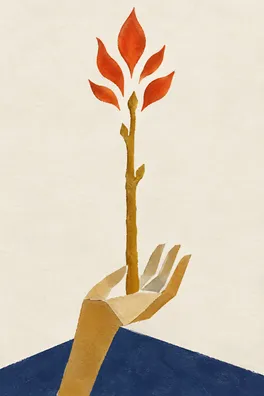
Ace of Wands
Reversed
The reversed Ace of Wands in A small next step points to a beginning whose energy or conditions are not ready. It can be easy to turn appreciation into another ambitious project: a beautiful journal, a daily ritual, a promise never to overlook anything again. If the enthusiasm quickly fades, the reversal asks you to examine the obstacle instead of interpreting the delay as a personal failure.
Separate interest, available energy and external conditions. If the practice feels meaningful but you are tired, a single sentence may fit better than a long evening reflection. If you dislike writing, notice one concrete detail while making tea or walking home. If the moment is repeatedly interrupted, move it to a less crowded part of the day. These adjustments preserve the intention while allowing its form to change.
Sometimes the honest answer is that a particular practice does not interest you. You can leave it aside and choose another way to pay attention. The caution is against waiting for perfect inspiration indefinitely; try a small version once and observe whether it brings you closer to your actual day. Appreciation can begin with precise noticing, even before warmth or motivation returns.
These cards make appreciation a form of honest attention. The Five of Cups acknowledges what hurts; the reversed High Priestess asks whose voice decides what you are allowed to feel; the reversed Ace of Wands keeps a new practice proportionate to your energy. Together they suggest that gratitude becomes more believable when it does not erase disappointment or demand enthusiasm on schedule.
For one week, try a brief evening note with two parts: something difficult that deserves acknowledgment, and something specific that supported you. Keep the detail concrete enough to recognize again, such as a friend waiting without rushing you or a familiar route that made a demanding day easier. You do not need to balance the emotional weight of the two entries or make the second cancel the first.
Review whether the practice helped you notice more or became another standard you felt unable to meet. If it feels performative, keep it private and shorten it. If it repeatedly brings up a misunderstanding, consider a gentle factual check or a conversation with someone you trust. The experiment is worth adjusting when its form obscures the life it is meant to help you see. What remains worth caring for when you stop requiring it to fix everything?
A question to take with you
What small support can I acknowledge today without asking it to cancel a real disappointment?
Group 3
Group 3
Habits and intention
Which small habit would better reflect what matters to me?
01Where you are

The Fool
Upright
The upright Fool in Where you are brings the openness of a beginning. You may be ready to try a different rhythm without having a full plan or a settled identity around it. That freshness is useful: a habit can start as an experiment in how you want to live rather than a declaration of who you must become. Potential is present, while experience and results still need to develop.
Choose a value that can appear in an ordinary moment. If curiosity matters, you might note one question during a walk; if care matters, you might put your phone aside for the opening minutes of a conversation. The first step should be small enough to try with the resources you actually have. Basic preparation protects the beginning: decide when it might happen and make the required object or space easy to reach.
The Fool’s blind spot is confusing freedom with the absence of limits. A burst of enthusiasm can produce a routine too large for the rest of your life. Keep the experiment low risk and leave room to discover that a different form suits you better. You are gathering experience, so an awkward first attempt is information rather than evidence that you were wrong to begin.
02What needs attention
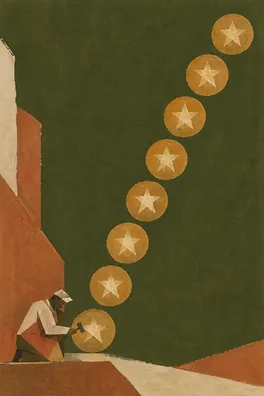
Eight of Pentacles
Upright
The upright Eight of Pentacles in What needs attention gives the new beginning a craft. Repetition matters, but so does the detail you are practicing. If a habit remains vague, such as being more intentional, it is difficult to notice improvement. Translate the value into one observable action and give that action enough focused attention to learn from it.
For example, a listening practice could involve letting someone finish before you prepare a reply. A creative practice might be five minutes spent on one technique rather than a demand to complete a whole piece. Compare attempts with curiosity: what made the action easier, and where did your attention drift? Improvement may appear as better preparation or a quicker return after interruption, not just a longer streak.
The caution is that diligence can become an end in itself. A perfectly recorded habit may no longer serve the value that inspired it. At a regular review, ask whether the practice is improving the experience you care about. If the answer is unclear, change one practical detail and observe again. Skill grows through careful adjustment as well as effort.
03A small next step

Queen of Swords
Reversed
The reversed Queen of Swords in A small next step highlights harsh judgment, resentment or bias in the way you evaluate yourself and others. A missed day can quickly become a claim that you never follow through. That sentence sounds decisive, but it describes neither the circumstances nor the next action. The card invites precision with empathy so that honest review remains useful.
Rephrase one judgment as a fact and a specific request. Instead of saying that you are hopelessly distracted, note that you opened your phone during the first few minutes of the task, then ask for a practical change: place it outside reach for the next attempt. If your habit involves another person, state the behavior you observed and the support you need without assigning a motive. Sharpness may defend a real need, but it can also make that need harder to hear.
The alternative interpretation is that anger contains information about an unrealistic demand or a boundary you have not named. Kindness does not require pretending that every arrangement works. Preserve the useful message while changing the delivery. Your next step can be a smaller commitment, a clearer request or a fairer description of what happened, rather than another round of self-criticism.
The Fool opens the door, the Eight of Pentacles teaches a repeatable action, and the reversed Queen of Swords asks how you will speak when practice becomes imperfect. This reading favors a habit that expresses a value and can survive ordinary disruption. Novelty alone may fade; repetition without meaning may become mechanical; criticism can undermine both. Their balance is a willing beginning followed by attentive, humane revision.
Choose one value and one action for the coming week. Attach it to a moment that already exists, prepare what you need and keep the first version modest. After each attempt, record one observable detail rather than a verdict on your character. If you miss the opportunity, note the obstacle and choose the next realistic moment. There is no need to create a larger debt of effort to punish the interruption.
At the end of the week, compare the practice with its purpose. If it helped, decide what made it workable before expanding it. If it did not, consider timing, scale or whether the action actually expressed the value. Keep a useful boundary where the routine asks too much of you or another person. What could you learn by treating consistency as the ability to return thoughtfully, rather than the ability never to falter?
A question to take with you
Which small action would express what matters to me, and how can I review it accurately without turning a difficulty into a judgment about my worth?