
Pick a group
Choose a group: what deserves your attention now?
Three complete reflections on appreciating what is present, shaping a sustainable habit and giving creative energy a workable home.
· AI-assisted readings from randomly drawn cards. For reflection and entertainment.
Take a breath. Pick the group that draws you in.
Group 1
Group 1
Appreciation
What is worth noticing and appreciating in my everyday life?
01Where you are

The Magician
Upright
The upright Magician in Where you are draws attention to the skills and resources you already use to make life happen. Appreciation here begins with noticing agency: the meal you assemble from what is available, the clear message you manage to send, or the practical repair that makes tomorrow easier. The card's emphasis on focused will explains why an ordinary act can matter. Something became possible because you directed attention and ability toward it.
You may overlook these acts precisely because you have become competent at them. A familiar skill can feel too easy to count, while an unfinished ambition absorbs all the credit you might have given yourself. Notice the difference between appreciating an ability and demanding constant productivity from it. If you are tired or short of resources, this card need not become an instruction to manufacture more. Recognizing a limit clearly is also a way of using judgment.
Choose one small thing to make with a skill you already possess: a nourishing snack, a short note, a tidy place for something you often lose. Afterwards name the resources that helped, including another person's contribution if there was one. The point is to see the relationship between effort and support. You can appreciate your own hand in an outcome without pretending you created every condition alone.
02What needs attention
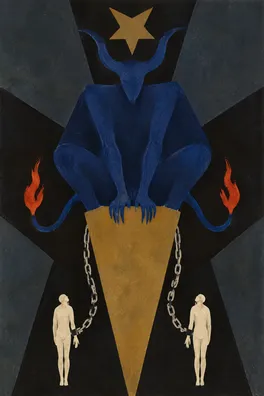
The Devil
Reversed
The reversed Devil in What needs attention brings gradual freedom into the appreciation reading. Its focus is recognizing a constraint and gaining distance from a pattern that once directed you. What deserves notice may be an absence: a notification you no longer obey instantly, a comparison you catch before it ruins the afternoon, or a request you can now consider without automatically agreeing. Quiet autonomy is easy to miss because it rarely arrives as a dramatic celebration.
This does not mean every discomfort is evidence of a harmful attachment, or that a difficult responsibility should simply disappear. Distinguish a chosen commitment from the feeling that you have no choice at all. A pattern may have once provided comfort or belonging, so loosening it can bring grief alongside relief. Appreciation can include gratitude for the support that helped you change without romanticizing what constrained you.
Name one pressure that has loosened and one arrangement that protects that opening. You might keep a device outside the room during dinner or agree with a trusted person on a manageable boundary. Notice whether the arrangement creates more room to choose. If it becomes another harsh rule, soften the method while preserving the intention. Freedom is more sustainable when it has practical support and does not depend on perfect willpower.
03A small next step

Four of Pentacles
Reversed
The reversed Four of Pentacles in A small next step asks you to explore the changing relationship between resources and security. The reversal has two directions: holding more tightly through fear, or releasing so quickly that a useful limit disappears. Appreciation can become tangled with both. You may save a good object forever because using it feels wasteful, or give away more time than you can afford because generosity seems like the only acceptable expression of gratitude.
The next step is therefore a bounded experiment, rather than a demand to become more generous or less cautious. Choose a resource you can safely work with: a little time, a familiar object or a modest amount within an existing budget. Decide in advance what you will use or share and what you will retain. If circumstances are genuinely tight, appreciation can mean caring for what you have and allowing yourself a necessary boundary.
Try the limit once and notice the after-effect. Did using the resource bring enjoyment, resentment, relief or anxiety? Those feelings offer information, but they do not alone prove the choice was right or wrong. Adjust the boundary if you exceeded your capacity. Learning that you can enjoy something without losing all security may matter more than the size of the gesture.
This group moves from noticing your capacity, through recognizing regained choice, to practicing a more balanced relationship with what you have. The Magician says appreciation can be active and specific. The reversed Devil asks whether an old demand still decides what counts as enough. The reversed Four of Pentacles brings the question into daily use: can a resource serve your life without becoming either a possession you cannot touch or a gift you cannot afford?
An alternative reading is that you already give and do too much. In that situation the helpful gesture may be preserving a quiet hour, accepting help or letting a task remain merely adequate. Appreciation does not require a cheerful account of every difficult circumstance. It can be accurate enough to name something valuable while acknowledging that another part of the day hurt.
For a week, record one ordinary act you helped make possible and one moment when you had more choice than before. On a day with enough capacity, try one bounded use or sharing of a resource. At the end of the week, look for what left you more present rather than more depleted. If the record starts to feel like a performance, reduce it to a single sentence. The experiment is useful when noticing changes your relationship with the day, even if the day itself remains imperfect.
A question to take with you
What quiet ability or regained freedom have I been treating as too ordinary to appreciate?
Group 2
Group 2
Habits and intention
Which small habit would better reflect what matters to me?
01Where you are

Ace of Swords
Reversed
The reversed Ace of Swords in Where you are suggests that the first obstacle may be an unclear conclusion rather than a lack of discipline. Its meaning includes confused judgment and words that cut without clarifying. You might call yourself inconsistent when the habit was never precisely defined, or insist that a routine is essential without knowing whose expectation it serves. A sharp self-description can sound decisive while leaving the real problem untouched.
Consider a recurring statement such as “I always waste my evenings.” It compresses several possible situations: exhaustion after work, an overfull plan, an activity that offers needed rest, or a genuine drift away from something you value. Each calls for a different response. The reversal asks you to turn the verdict into an answerable question. On which evenings does the pattern occur, what happens just before it, and what information would distinguish rest from avoidance?
For now, observe one occurrence without assigning yourself a character trait. Write the intention, the actual action and the condition around it. If you discuss it with someone else, describe the event rather than using an accusation. Clearer language is itself a small habit: it makes room for an adjustment you can evaluate and reduces the temptation to force certainty through self-criticism.
02What needs attention

Temperance
Upright
Upright Temperance in What needs attention emphasizes integration, patience and a balance that can be sustained. In this position it asks how a valued activity could fit among your existing needs. A habit that expresses care for learning may still need to coexist with sleep, family responsibilities and recovery. Balance is a process of adjusting the mixture, not a perfect division of every hour.
If your usual response to disappointment is a demanding restart, Temperance points toward a gentler scale. A short period of focused effort followed by a real break may support more continuity than a heroic session that leaves you unable to return. Conversely, moderation is not an excuse to keep a routine so vague that it never happens. The intention needs a recognizable place and a size you can actually repeat.
Choose a session length that suits today's capacity and decide when you will stop. Pair it with a concrete pause, such as standing up, getting water or looking away from a screen. Notice whether the pairing makes returning easier. If the activity consistently expands beyond the available space, adjust the boundary or the surrounding commitments. The card's harmony comes from honest accommodation of different needs, not from asking one need to disappear.
03A small next step

Six of Cups
Reversed
The reversed Six of Cups in A small next step turns toward a habit inherited from an earlier version of life. Its meaning allows both being caught in the past and becoming independent of it. You may be trying to recreate a routine that worked when you had different hours, fewer responsibilities or another person's structure around you. The old habit may preserve a valuable feeling even when its exact form no longer fits.
Ask what you actually miss: playfulness, companionship, regularity, quiet or a sense of being cared for. That value can travel into a new arrangement. If an elaborate morning ritual once brought calm, its present equivalent might be a few undistracted minutes after lunch. If a family custom felt reassuring, you may adapt its timing or frequency while keeping the connection. Changing the form does not require declaring the past mistaken.
Choose one inherited rule and write a version that fits your present needs. Try it once before announcing a permanent identity change. Notice whether you feel more ownership or merely another demand to become someone new. If the old routine still serves you well, keep it deliberately. Independence includes choosing continuity after reflection, rather than rejecting familiarity just to prove you can.
The reversed Ace of Swords asks for a clearer description, Temperance asks for a sustainable mixture, and the reversed Six of Cups asks for a form suited to your present life. Together they suggest a habit built from understanding instead of a verdict about your character. The movement matters: first establish what is happening, then choose a realistic pace, then adapt the inherited rule that may be making that pace harder.
The competing possibility is that the intention itself no longer matters to you. If observation shows that a routine exists mainly to satisfy an old expectation, persistence may not be the best measure of integrity. Keep the underlying value under review. You may discover that the wish is still alive but needs a smaller expression, or that another activity now expresses it more honestly.
For the next week, use one short sentence to name the value and one modest action that serves it. Attach the action to a dependable moment and include a stopping point or break. After each attempt, record what made it workable or difficult; avoid keeping a score of personal worth. If you miss the moment, examine the condition before increasing the demand. At the week's end, retain, resize or replace the action according to what you learned. A habit reflects intention when you can explain why it belongs in your life now.
A question to take with you
Which old rule about being disciplined could I adapt so that my next small action serves a value I still choose?
Group 3
Group 3
Creative energy
What would help my creativity find its way forward?
01Where you are

Page of Wands
Upright
The upright Page of Wands in Where you are suggests a beginning animated by curiosity and enthusiasm. The idea may be vivid before the method is mature. You might want to write, make an object, explore sound or try an unfamiliar way of solving a daily problem. In this position the card gives that spark room to be exploratory. Interest is meaningful even when it has not yet become a finished project.
The Page is also inexperienced, which makes beginnerhood part of the reading rather than a flaw to conceal. A first attempt may not resemble the image that inspired it. If you judge it by the standards of someone who has practiced for years, you can confuse a normal learning gap with a lack of creative capacity. The opposite blind spot is collecting exciting beginnings without spending enough time with any one of them to discover its possibilities.
Choose one small unfamiliar approach and give it a contained session. Change a material, viewpoint, tool or constraint rather than trying to reinvent the whole project. Afterwards note what surprised you and what you want to investigate again. That record gives enthusiasm a direction. You do not need to decide whether the idea will become important before allowing it one honest experiment.
02What needs attention

Eight of Cups
Upright
The upright Eight of Cups in What needs attention suggests that something once absorbing may no longer offer the meaning you seek. Its departure theme is nuanced: past investment can have been worthwhile even when it does not justify continuing in the same form. Perhaps a format now feels repetitive, a public response has begun to dictate the work, or the conditions around a project leave too little room for discovery. These are possibilities to examine, not a claim that you must leave a particular situation.
Separate dissatisfaction with the work from dissatisfaction with fatigue, isolation or an unrealistic deadline. An exhausted week can make a valued practice feel empty. Equally, sunk effort can keep you attached to a direction you no longer endorse. The question is what specifically needs distance: the subject, the method, the audience expectation or the way the activity is organized. A precise answer helps prevent a symbolic farewell from becoming an unnecessary upheaval.
Write three lines: what you want to leave, what value you want to approach, and one reversible adjustment. You might set aside a repeated feature, work privately for a session or pause an optional commitment. Notice whether space brings curiosity back. If nothing changes, investigate another condition before making a larger decision. Leaving a pattern can begin with a small boundary, and honoring past work does not require repeating it indefinitely.
03A small next step

King of Pentacles
Upright
The upright King of Pentacles in A small next step brings mature stewardship to the creative spark. His meaning includes reliability, practical management and protecting resources over time. In this position, creativity benefits from a workable home: materials that can be found, time someone can protect and an arrangement that can be maintained. The response to uncertainty may be a modest structure that lets you return, rather than another burst of inspiration.
Treat the structure as care for the work and the life around it. A clear surface, a folder for drafts or a recurring session can reduce the cost of beginning again. If other people share the space or responsibilities, discuss the arrangement instead of assuming their support. Material stability need not mean buying better equipment. An expensive tool can become another obligation when the real shortage is time, attention or permission to practice imperfectly.
Review one resource you already manage. State its creative purpose, who will maintain it and when you will check whether it is useful. Protect a small enough commitment that it does not undermine essential needs. The King's blind spot would be letting management become control: organizing endlessly while avoiding the uncertainty of making. Keep one tangible act of creation inside the arrangement so that stewardship serves the work.
The Page of Wands offers the spark, the Eight of Cups asks what no longer nourishes it, and the King of Pentacles provides continuity. The cards challenge the idea that creativity advances only by accumulating more ideas or more tools. It may need both a selective departure and a reliable place to return. Curiosity supplies direction, meaning supplies a reason to choose, and stewardship supplies the conditions for another attempt.
There is another possible emphasis: the project may still be right while its working conditions are wrong. Before abandoning it, see whether rest, a clearer boundary or a less public process changes your experience. If the dissatisfaction remains specific and persistent, honor that information as well. You can appreciate what an earlier phase taught you without promising it unlimited future time.
This week, make one small prototype, temporarily set aside one element that feels drained of meaning, and give the experiment a practical home using resources already available. Decide when to return and what would make that return manageable. At the review, look for renewed interest and an arrangement that supports your wider life, rather than requiring a polished result. If structure crowds out exploration, simplify it; if enthusiasm evaporates between sessions, make the next starting point easier to see. Creative movement can be both adventurous and well cared for.
A question to take with you
What could I gently set aside so that one curious idea has enough space and practical support to develop?