
Pick a group
A little more room to choose, connect, and begin
Choose a group for a complete reflection on direction, friendship, or a realistic first step. Let the question that meets your day guide you.
· AI-assisted readings from randomly drawn cards. For reflection and entertainment.
Take a breath. Pick the group that draws you in.
Group 1
Group 1
Choosing a direction
What can help me clarify a choice without rushing?
01Where you are

Ten of Wands
Reversed
The reversed Ten of Wands in where-you-are places the choice inside the load you already carry. Its reversal has two plausible directions: you may be unable to share responsibility, or you may be beginning to release what is excessive. That difference matters because a decision made under too much weight can look like a search for direction when it is partly a search for relief. Before comparing options, notice the conditions under which you are trying to compare them.
You might be considering a course, a work commitment, or a change in routine while also keeping several promises to other people. Every option can feel impossible when you assume those promises must stay exactly as they are. Alternatively, you may recently have stepped back from a duty and feel unsettled by the space it created. The unfamiliar lightness can be mistaken for a lack of purpose. Neither situation proves that your available choices are wrong.
Make a short inventory of what must happen this week, what could move, and what could be shared. Adjust one commitment that exceeds your actual capacity before asking yourself for a final answer. If someone else is affected, discuss the change clearly instead of silently dropping the task. The blind spot is expecting a brief rest to solve a structural shortage of time or support. If the load remains too large, that is relevant evidence about the choice itself, and it deserves a place in the decision.
02What needs attention

Eight of Swords
Upright
The upright Eight of Swords in what-needs-attention describes a narrow field of perceived movement. Some restrictions may be external and consequential; others may be assumptions that have become difficult to distinguish from facts. In this position, the card asks for greater precision about the boundary. It does not suggest that you can think your way out of every financial, social, or practical constraint.
For example, a deadline may be fixed while your belief that no extension can be requested remains untested. A course may genuinely be unaffordable while the assumption that learning must happen through that course could be reconsidered. Write one limiting sentence exactly as it occurs to you, then separate what you have confirmed from what you expect. If the boundary is real, consider what help or preparation would make it easier to navigate rather than arguing with yourself about whether it should exist.
Choose a single question that could enlarge the picture: ask about scheduling, clarify a requirement, or consult someone with direct experience. Keep the inquiry small so that information gathering does not become another way to postpone the decision forever. The card’s blind spot is an overly tidy story of self-limitation. You may need access, resources, or another person’s cooperation. Learning that support is unavailable is still useful information; it helps you choose from the options you actually have.
03A small next step
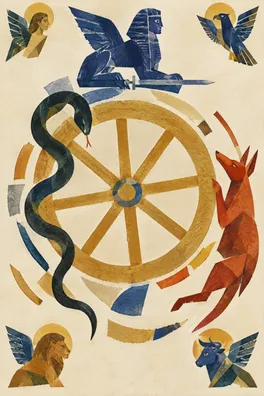
Wheel of Fortune
Upright
The upright Wheel of Fortune in the small-next-step position introduces timing and changing circumstances. It can symbolize an opening or a favorable turn, but it also recognizes forces you cannot organize by will alone. Here the useful movement is to make your choice adaptable. A small step can put you in a better position to respond when circumstances change, without requiring confidence about the whole future.
You could request information about the next intake rather than commit to a full program, or try one version of a new routine before reorganizing your week. These steps let an option become more concrete. If an opportunity has appeared recently, ask what makes it useful now and what would remain valuable if its timing shifted. The Wheel invites attentiveness to an opening; it does not promise that an opening will arrive or that every unexpected change will be welcome.
Set a date to reconsider the choice and identify the information that would matter by then. Leave a little room in the plan for delay or a changed requirement. If a decision cannot wait, use the best evidence available and specify what you could revise later. Notice the blind spot of treating timing as destiny: a favorable moment still needs preparation, and a difficult moment does not make a meaningful direction permanently unavailable.
These cards suggest that clarity begins by changing the conditions of the decision. The reversed Ten of Wands asks whether the load is distorting the view; the Eight of Swords asks which boundaries are confirmed; the Wheel of Fortune asks what can remain flexible. Together they offer a sequence of relief, inquiry, and adaptation. You do not have to solve all three at once.
The tension is that releasing a burden can feel risky when you already feel restricted. A familiar obligation may also provide identity or stability. In that case, the right experiment might be a smaller adjustment rather than a dramatic departure. If your capacity is adequate and the restriction is firmly established, this reading may fit better as an invitation to prepare for a later opening. Waiting can be active when it has a purpose, a limit, and a way to notice changed circumstances.
Over the coming week, make one adjustment to your load, ask one factual question about an option, and spend a short period trying a reversible version of that option if possible. Write down what felt clearer after each step. Review on a day you choose in advance, using the new evidence rather than demanding a sudden feeling of absolute certainty.
Change the experiment if it creates costs you cannot absorb, depends on unavailable support, or keeps expanding into more research without a decision. The measure of progress is whether the choice has become more understandable and workable. What could become visible if you no longer required yourself to carry every obligation while finding the answer?
A question to take with you
Which burden could I adjust, which limit could I clarify, and what would help me recognize a useful opening?
Group 2
Group 2
Friendship
How can I bring more care and reciprocity to my friendships?
01Where you are
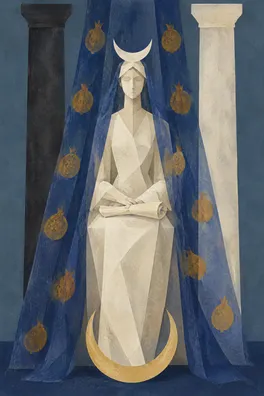
The High Priestess
Upright
The upright High Priestess in where-you-are begins with the part of friendship that has not yet been put into words. You may have a quiet sense of comfort, distance, longing, or an unmet preference. This card values observation and inner knowledge, especially when outside opinions make it hard to hear your own response. In this position, listening to yourself comes before deciding what the friendship means.
Perhaps you leave a gathering feeling connected but realize later that you never spoke about something important. Or you notice that a familiar rhythm no longer suits your available time. These feelings are information about your experience. They do not reveal why a friend acted a certain way or what that person secretly intends. The High Priestess’s association with hidden knowledge needs particular care here: uncertainty is a reason to stay curious, not permission to fill the silence with a confident explanation.
Write privately about one recent interaction, distinguishing what happened from what you felt and what you do not yet know. Then decide whether the feeling needs more observation or a gentle conversation. You might say that you miss having time to talk and ask whether another format would work. The blind spot is remaining silent because you hope closeness should make your needs obvious. Intuition can help you find the words; reciprocity becomes more possible when those words are actually shared.
02What needs attention

Six of Cups
Upright
The upright Six of Cups in what-needs-attention brings familiar kindness and the influence of shared history into view. An old ritual, remembered generosity, or a friendship’s earlier form may still nourish you. In this position, the card asks what the past offers the present and where it needs updating. A memory can suggest a caring gesture without becoming a standard that everyone must recreate.
If you once spent long afternoons together but now manage different schedules, the underlying gift may have been unhurried attention rather than the exact activity. A short walk or a thoughtful message could carry that quality into today. If you have always been the organizer, nostalgia may also keep that role in place after it has become tiring. Familiarity can feel warm while hiding a pattern that needs a new agreement.
Offer a simple kindness that fits your capacity, and make room to learn what the other person would actually enjoy. You could mention a shared memory and ask about a manageable way to reconnect. Notice how care returns over time, including forms you might overlook, rather than turning one exchange into a ledger. The alternative reading is that the past is difficult rather than comforting. You need not revive an old connection to honor this card; you can choose a kindness you wished you had received and practice it within a friendship that feels welcome now.
03A small next step

King of Wands
Upright
The upright King of Wands in the small-next-step position encourages initiative that makes room for other people’s choices. His leadership turns a vision into organized action, and friendship gives that quality a cooperative setting. You can offer a direction without assuming authority over the group. A clear invitation often asks less of a friend than a vague intention to get together someday.
For example, propose a short gathering with a time and an easy way to decline or suggest an alternative. If you hope for more balanced planning, say so warmly and ask whether someone else could choose the next activity. The purpose is to make participation easier and responsibility more visible. It is not to test affection through compliance with your plan or to recruit everyone into the same level of enthusiasm.
After offering the idea, listen to the response and allow it to alter the plan. A friend may have less capacity this week without having less care. If a pattern of one-sided effort continues, discuss that pattern directly instead of increasing your effort until resentment does the speaking. The King’s blind spot is becoming the indispensable organizer. Good initiative can include inviting someone else to lead, accepting a different idea, or choosing a smaller plan that leaves everyone more room.
This reading moves from inward listening through remembered kindness to an invitation that others can help shape. The High Priestess supplies sensitivity, the Six of Cups supplies warmth, and the King of Wands supplies a way to act. Their balance matters: observation without expression can leave needs invisible, nostalgia without curiosity can freeze an old role, and initiative without listening can crowd out reciprocity.
Care need not look identical on both sides of a friendship. One person may organize, another may remember details, and another may offer steady company during difficult periods. The question is whether the exchange leaves room for both people’s needs and choices. If you are consistently depleted, appreciating those different forms should not become a reason to overlook the imbalance. If the friendship already feels mutual, the reading may simply invite a clearer expression of something you value.
For the coming week, name one quality you miss or appreciate, choose a small gesture that embodies it, and offer one specific invitation. Include your real limits in the proposal. Afterward, notice whether you felt able to speak honestly and whether the other person had space to respond in their own way. If useful, ask what would make future contact easier for them too.
Adjust the experiment if the gesture feels obligatory, if the plan is beyond either person’s capacity, or if you are using a single response to decide the value of the whole friendship. A longer pattern may require a direct conversation and a different level of effort. What kind of shared care becomes possible when you express a need without assigning the other person a script?
A question to take with you
What small expression of care would feel honest for me and leave a friend free to respond in their own way?
Group 3
Group 3
Your next small step
Where could one small, realistic step make a difference?
01Where you are
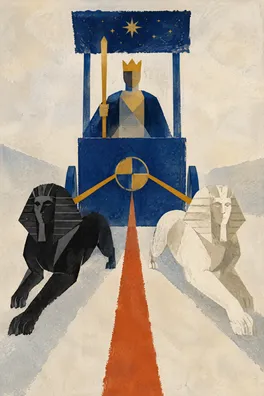
The Chariot
Upright
The upright Chariot in where-you-are suggests that effort and determination are already present. Its central work is to harness opposing forces toward a clear destination. In this position, the question is less about finding more drive than about deciding what your current drive is meant to accomplish. A busy day can contain a great deal of motion without a meaningful sense of arrival.
You might want to begin a personal project while also wanting to keep every existing routine intact. Or one part of you wants a polished result while another wants to learn through practice. Those aims pull differently, but they do not have to become enemies. Define a destination small enough for both to cooperate: a rough outline, one inquiry, or a usable first version. Completion should be something you can recognize without waiting for another person’s applause.
Choose the smallest result that would make the next step easier, then remove one unnecessary stage. If you keep preparing elaborate systems before beginning, the removable stage may be the system itself. The blind spot is equating mastery with constant control. Delays, limited energy, and new information may require a slower route. Notice whether the action brings you closer to your stated destination; if it only demonstrates how hard you are trying, revise the destination or the route.
02What needs attention
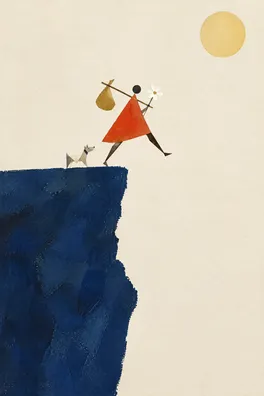
The Fool
Upright
The upright Fool in what-needs-attention gives the beginner a place in the plan. His openness can sit awkwardly beside the Chariot’s wish for direction: you want to know where you are going while also allowing an experience to teach you something unexpected. In this position, the Fool asks whether you have left room to begin before you can perform with confidence. Potential becomes useful through contact with the actual activity.
If you are curious about drawing, a new language, or a different way to organize a shared task, the first attempt can be deliberately modest. Try a short practice with materials you already have, or draft a message before deciding whether to send it. The point is to discover what the activity asks of you. You may find interest, friction, or a need for basic instruction. None of those outcomes requires a grand story about who you are becoming.
Make the first attempt low-risk by naming its time, cost, and stopping point. Basic preparation protects openness: check a necessary requirement, choose a safe setting, and know which commitments you are actually making. The Fool’s blind spot is treating enthusiasm as sufficient preparation. The opposite blind spot is demanding such complete readiness that no beginning qualifies. After trying, record one thing you learned that planning alone could not have shown you.
03A small next step

The Hierophant
Reversed
The reversed Hierophant in the small-next-step position asks you to examine an inherited answer. Its reversal can signify questioning authority, choosing an unconventional route, or finding that an old convention no longer fits. Here the useful act is specific: identify one rule you have been following and understand what it is for. You can adapt a practice more intelligently when you know which part serves a purpose and which part is merely familiar.
Perhaps you believe a creative project requires a particular tool, that learning must follow a prestigious sequence, or that a routine is only worthwhile if done every day. Ask where that advice came from, what circumstances it assumes, and what happens if you change one detail. A borrowed book, a shorter practice, or a different order may fit your situation better. Where a requirement protects safety or enables participation, learn its basis before treating it as optional.
Write a trial rule in your own words and give it a limited run. For instance, you could replace an ambitious daily session with a few manageable sessions and observe whether you return more willingly. The reversal does not make opposition valuable by itself. Rejecting advice automatically can leave you as governed by it as obeying automatically. Look for a reasoned fit between the method, your values, and the result you are trying to create.
The Chariot offers direction, the Fool offers willingness to learn, and the reversed Hierophant offers permission to examine the method. Together they suggest a small step with a clear destination and a flexible route. Determination can keep the experiment contained, while curiosity keeps it from becoming a performance of certainty. Questioning a convention makes room for a method that suits the person actually doing the work.
There is a tension between choosing an independent path and overlooking useful guidance. If your task is unfamiliar or has consequences for other people, the next step may be to ask an experienced person a precise question. Independence can include choosing whose expertise to trust and why. If you already have enough guidance and keep collecting more, the reading may fit as an invitation to make the first attempt and let experience refine the plan.
This week, choose one modest result, set aside a short period to try it, and change only one familiar rule about how it must be done. Keep the necessary preparation intact. At the end, note what you completed, what surprised you, and what made the attempt easier or harder to repeat. Use that information to choose the following step, rather than expanding the commitment while enthusiasm is high.
Adjust the experiment if the change creates avoidable problems, if the result is too vague to recognize, or if the chosen step still exceeds your capacity. A smaller attempt can be more informative than a larger promise. What could you begin if you allowed yourself to be both purposeful and inexperienced?
A question to take with you
What clear, low-risk beginning would teach me something useful, and which familiar rule could I thoughtfully adapt?