
Pick a group
Notice what supports you, then choose a manageable step
Choose the question that meets your day: appreciation, direction or one realistic next step.
· AI-assisted readings from randomly drawn cards. For reflection and entertainment.
Take a breath. Pick the group that draws you in.
Group 1
Group 1
Appreciation
What is worth noticing and appreciating in my everyday life?
01Where you are

King of Wands
Reversed
In the position describing where you are, the reversed King of Wands suggests that strong expectations may be crowding out appreciation. Leadership can become domineering or impulsive when every shared effort must prove progress. Alternatively, an ambitious promise may have lacked follow-through, leaving frustration that deserves acknowledgment rather than a demand for gratitude.
If a shared evening routine keeps disappointing you, ask everyone involved to name one obstacle before designing a bigger plan. One person might need a clearer task, while another might be carrying more than you noticed. These are possibilities to explore together, not motives the card can reveal.
Address one agreed obstacle and name a contribution that already helps. Keep your own responsibility visible; praising others while retaining unrealistic demands would change little. Afterwards, notice whether participation became easier or whether your expectations simply found a new target. Appreciation becomes more specific when you can see both what someone contributes and what makes that contribution difficult.
02What needs attention

Six of Cups
Upright
In what needs attention, the upright Six of Cups brings simple kindness, familiar feelings and the past into the present. Its upright orientation invites attention to a nourishing memory or ordinary gesture, without promising a reunion or requiring earlier circumstances to return. The useful question is what quality of support can still be carried forward.
If a familiar meal recalls being cared for, you might prepare a simple version or thank someone for a kindness you remember. If that memory also contains sadness, you need not recreate the whole scene. A small present-day gesture can retain its warmth while respecting what has changed.
Return to one comforting habit or offer a kindness that fits the recipient now. Avoid assuming that what once comforted you must suit someone else, or using nostalgia to dismiss a current difficulty. Afterwards, notice whether the gesture helped you attend to today's life or withdraw from it. Which part of the past offers something usable here?
03A small next step

Temperance
Upright
As a small next step, upright Temperance translates appreciation into pace and proportion. Its meaning is gradual integration: effort, rest and ordinary pleasure can be brought into a rhythm you can sustain. Balance here is something adjusted through experience, rather than a perfect arrangement you must achieve immediately.
If work repeatedly pushes a comforting routine out of the evening, shorten one work session and give a proper break a place in the day. You might pair that break with a familiar pleasure from the Six of Cups. If the work is time-sensitive, choose another session or a smaller adjustment rather than creating a new practical problem.
Try the change once, then notice what it made possible. The pitfall is policing every minute or calling an unmanageable workload balanced because you inserted a pause. Keep what helps, change what does not and allow the rhythm to develop gradually. What pace leaves enough attention to recognize support while it is actually happening?
The reversed King of Wands shows how demanding results can obscure what already supports you. The Six of Cups offers a different object of attention: familiar kindness rather than another achievement. Temperance gives that kindness room through a sustainable rhythm, so appreciation becomes part of living rather than another task to perform well.
Yet the cards also leave room for dissatisfaction. Nostalgia might conceal a present problem, and a gentler pace will not repair a broken promise by itself. If an actual obstacle keeps recurring, name it with the people involved and address one part. Gratitude can accompany that conversation without replacing it.
For a week, notice one helpful detail each evening and try one adjustment that makes receiving it easier, such as ending a work session in time for a familiar routine. If that feels forced, offer one simple kindness instead and notice the response without expecting repayment. Review whether the experiment made support more visible or added pressure to feel grateful. What deserves appreciation, and what still needs an honest change?
A question to take with you
What support could you notice more fully without pretending that everything is easy?
Group 2
Group 2
Choosing a direction
What can help me clarify a choice without rushing?
01Where you are

Eight of Cups
Upright
In where you are, the upright Eight of Cups acknowledges an emotional gap between past investment and present fulfillment. Its departure theme gives the wish for deeper meaning a place in the reading; it does not make every disappointment a direction to leave. Earlier effort can retain value even when it no longer answers your current needs.
If a long-running project feels empty, distinguish the part you want to leave from the value you want to approach. You might miss meaningful participation rather than the entire setting. Write those two things down, followed by a reversible adjustment that could reveal more about the gap.
Try a different role, rhythm or boundary if one is available and appropriate. Staying solely to justify past effort can obscure your present experience, but leaving without naming the unmet need may carry the same question elsewhere. Afterwards, consider what changed and what remained absent. Do you want different surroundings, a different way of inhabiting them, or both?
02What needs attention

Six of Wands
Upright
In what needs attention, the upright Six of Wands makes visible success and public support relevant to your choice. Recognition can mark real effort and help you see what you have accomplished. Because this card concerns success that others see, it also asks how much authority applause is receiving in your definition of direction.
If one option comes with an impressive title or likely praise, name the actual achievement it would represent. Then picture an ordinary day after the congratulations: which activities would matter to you? External approval and private satisfaction can overlap, but neither should be assumed from the other.
Note one genuine step forward and thank someone who supported it. Alongside that visible measure, describe one sign of progress you could recognize privately. Avoid rejecting all praise just to demonstrate independence; useful feedback may show a strength you overlook. Afterwards, ask whether recognition clarified what you value or made it harder to admit what still feels unfulfilled.
03A small next step

Nine of Cups
Reversed
As the small-next-step card, the reversed Nine of Cups asks you to inspect the wish before enlarging the commitment. Its dissatisfaction may concern a wish still unfulfilled, or the discovery that getting what you wanted did not meet an inner need. More pleasure or approval may repeat the same gap rather than explain it.
If you want a celebrated role because it seems to promise fulfillment, separate what others would admire from what you hope to experience each day. Perhaps the need is meaningful work, time to yourself or a sense of participation. Treat those as possibilities to investigate, not conclusions the card makes for you.
Try a small version of the neglected experience before making a large commitment. Notice its ordinary texture as well as its appeal in imagination. Avoid treating all enjoyment as indulgence or expecting one pleasant trial to resolve a complex choice. Afterwards, ask whether the experience mattered when nobody was watching and what remained unsatisfied.
The Eight of Cups and Six of Wands can pull in different directions: one names the gap that encourages departure, while the other recognizes visible achievement and support. The reversed Nine of Cups complicates both. Leaving for a more admired result may not answer the unmet need, yet existing recognition does not make dissatisfaction illegitimate.
Read the three together as a way to separate what you are moving away from, what others reward and what you hope to experience. These may overlap, but they are not interchangeable. If the setting is less of a problem than your role or pace within it, staying with one changed condition may offer useful evidence.
Over the next week, try one reversible adjustment connected to a named value. Record both your private satisfaction and any external feedback, including occasions when they disagree. If the trial feels empty, reconsider the need it was meant to serve rather than immediately choosing a bigger version. What evidence would help you decide whether to change direction, change one condition or keep exploring?
A question to take with you
What evidence from your own experience would help you choose without borrowing someone else's definition of success?
Group 3
Group 3
Your next small step
Where could one small, realistic step make a difference?
01Where you are

The High Priestess
Reversed
In where you are, the reversed High Priestess suggests that outside voices or suppressed feelings may be obscuring what you already notice. The reversal concerns disconnection and careful handling of information, not secret knowledge about another person. A feeling can show you where a question begins without proving your explanation of it.
If repeated advice leaves you unable to describe your own reaction to a commitment, pause the search for opinions and name one feeling privately. Then separate it from an assumption: unease is something you experience; another person's intention may still be unknown. Identify any practical detail that needs clarification.
Write only what is useful, and consider which information should stay confidential before asking anyone else for help. Silence can protect privacy, but it can also keep a necessary question unasked. Afterwards, notice whether you can distinguish your feeling, the known facts and what remains unclear. What becomes easier to acknowledge when the outside voices quieten?
02What needs attention
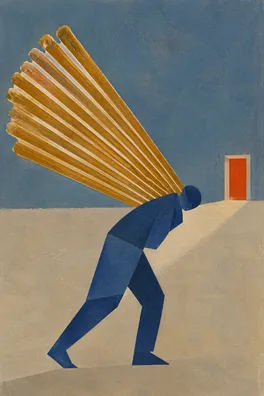
Ten of Wands
Reversed
In what needs attention, the reversed Ten of Wands holds two possibilities: refusing to share responsibility may let the load accumulate, or setting down excess responsibility may already be opening space. The position asks you to examine that threshold. Endurance alone does not tell you whether a commitment is sustainable or fairly distributed.
If your week is full of tasks you automatically accept, list what you can realistically carry and identify one commitment beyond that limit. A suitable person might take a defined part, or the deadline or scope might be renegotiated. Clarify the handover rather than assuming an unspoken request will be understood.
If sharing is impossible, discuss what can be reduced or postponed where circumstances allow. The pitfall is silently abandoning a task someone still relies on, or supervising every detail until help creates more work. Afterwards, compare the actual consequence with the one you feared. Which responsibility needed your attention, and which had become yours mostly through habit?
03A small next step
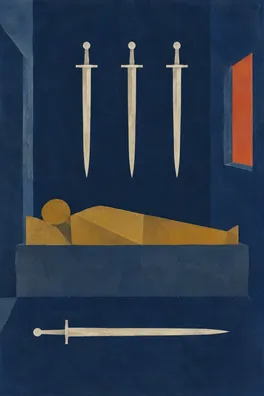
Four of Swords
Upright
In the small-next-step position, the upright Four of Swords offers a deliberate pause after strain. Its rest and reflection give thoughts room to settle after stepping away from conflict or activity. This is a temporary interval with a return, so you can make room without deciding the final future of everything you carry.
If messages keep breaking into your breaks, choose a manageable period away from them and tell anyone who depends on you when you will be available. Select one priority for your return so the pause does not become a rehearsal of the entire unfinished list. Where immediate responsibilities remain, arrange coverage or choose a more workable interval.
Notice whether you actually stepped away or continued the same work in your head. Avoid turning rest into a project that must produce an insight on demand. Afterwards, see what has settled and what still needs a practical change. What kind of pause offers recovery rather than simply postponing another round of strain?
The reversed High Priestess names difficulty hearing your own response; the reversed Ten of Wands asks what responsibilities crowd that space. The upright Four of Swords offers a pause in which listening becomes more possible. Together they suggest that clarity may need practical room as well as private reflection.
There are alternatives within the reading. If you are already releasing burdens, the task may be to protect that space rather than simplify again. If a necessary detail is missing, quiet time cannot supply it; ask a precise question while respecting privacy. Rest also needs support if unchanged commitments refill the interval immediately.
This week, name one feeling, renegotiate one defined task and protect one manageable quiet interval. Begin with whichever makes the other two possible, rather than treating them as another demanding list. Afterwards, note what became clearer and which condition still needs adjustment. If little changed, try a different boundary or seek the missing practical information. What is the smallest change that would let your next step arise from what you can actually carry?
A question to take with you
What could you set down long enough to hear what your next step actually needs to be?