
The market mirror
A steadier way to read the headlines
Three headlines offer different snapshots of market pressures and movement. Let the spread be a prompt to notice how you take in uncertain information, not a forecast.
· AI-assisted readings from randomly drawn cards. For reflection and entertainment.
The news behind this reading
News snapshot · October 9, 2026 at 8:00 AM · New York
Yahoo Finance
US Stock Market Today: S&P 500 Futures Dip As Higher Inflation Expectations Lift Rate Fears ↗
Yahoo Finance reports that S&P 500 futures dipped as higher inflation expectations raised rate concerns.
Yahoo Finance
Stock market today: Dow, S&P 500, Nasdaq futures rise as oil prices fall, tech recovers ↗
Yahoo Finance reports that Dow, S&P 500, and Nasdaq futures rose as oil prices fell and technology stocks recovered.
Yahoo Finance
S&P 500, Nasdaq end lower as crude prices jump, chip stocks weigh ↗
Yahoo Finance reports that the S&P 500 and Nasdaq ended lower as crude prices jumped and chip stocks weighed.
A three-card reflection
01Backdrop
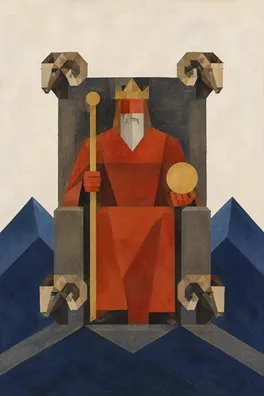
The Emperor
Upright
The upright Emperor brings attention to authority, structure, and the systems that shape a situation. As the backdrop to these headlines, it suggests looking at the frameworks behind the reported snapshots rather than treating any one headline as the whole story. The headlines mention inflation expectations, oil prices, technology stocks, and rate concerns; the card adds no new market facts, but invites disciplined attention to what is actually reported.
In everyday terms, if you notice yourself checking updates repeatedly after seeing contrasting headlines, you might choose a set time to review them and write down what each report says without adding a prediction. That creates a little order around uncertainty without demanding certainty from it.
A useful response is to distinguish the source, the claim, and your own interpretation. Which rules or routines help you stay informed, and which ones are making you feel more in control than the information allows?
02Pressure point
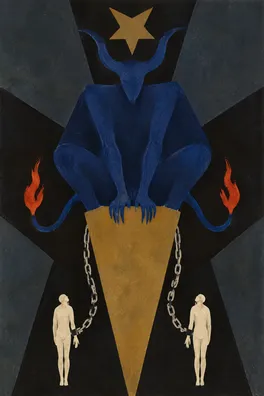
The Devil
Upright
The upright Devil points to attachment, dependency, and the way desire can narrow a sense of choice. As the pressure point here, it can symbolize becoming caught in a loop with attention: a headline provokes worry or excitement, and checking again seems like the only way to settle it. The supplied reports contain different snapshots, but that alone does not establish a larger direction or settle what comes next.
For example, if a person finds themselves refreshing a news feed during a busy workday, they could notice whether the habit is answering a practical question or simply feeding more urgency. This is a possibility to examine, not an assumption about you.
Try setting a modest boundary, such as one planned check-in and a note of what remains unknown. You can still care about the subject without giving it every spare moment. Where might one small choice loosen the grip of an information habit?
03Grounded response
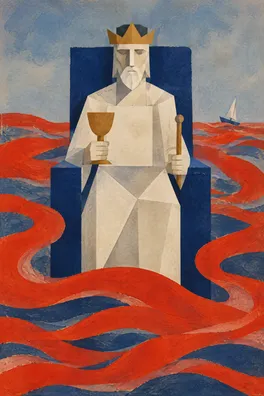
King of Cups
Upright
The upright King of Cups represents emotional steadiness, compassion, and judgment that can make room for feeling without being ruled by it. As a grounded response to these headlines, this card encourages a measured relationship with uncertainty: the reports can be read carefully while fear, hope, or urgency is acknowledged as a personal reaction rather than evidence about what will happen.
If a headline leaves you unsettled, you might pause before sharing it or changing a plan, then separate three things: what the headline reports, what you feel, and what decision is actually yours to make. That brief distinction can help keep an uncertain story from becoming an immediate command.
A realistic action is to choose a reliable time and purpose for your next check-in, then step away when that purpose is met. You do not need to suppress emotion to respond thoughtfully. How can you stay informed while keeping your attention and choices in your own hands?
Order, attachment, and emotional steadiness form a useful sequence for meeting these headlines. The Emperor asks for a clear frame: what was reported, where it came from, and what remains unknown. The Devil highlights how quickly attention can become bound to repeated checking or to the wish for a decisive answer. The King of Cups offers a counterweight, making room for concern without letting concern stand in for evidence. Together, they describe a way to engage with uncertainty, not a prediction about markets.
There is a possible tension: structure can support clear thinking, but it can also become an attempt to control what cannot be controlled. Similarly, stepping back from an information loop may be a healthy boundary, or it may become avoidance of information that genuinely matters to a decision. The headlines themselves offer different reported snapshots; they do not resolve that tension for you. Your purpose in reading, and the scope of any decision you face, are important context.
For the coming week, try a small routine: pick one planned time to review news, write one sentence on what a headline actually says, and another on what you do not yet know. Then pause before acting on any conclusion. Adjust the routine if it makes you less informed or more preoccupied. What would help you tell the difference between useful attention and a search for certainty?
A question to take with you
What boundary could help you stay informed without letting headlines take over your attention?