
Pick a group
Small Ways to Reconnect and Begin
Three everyday themes—friendship, learning, and work—invite honest conversation, room to adjust, and manageable next steps.
· AI-assisted readings from randomly drawn cards. For reflection and entertainment.
Take a breath. Pick the group that draws you in.
Group 1
Group 1
Friendship
How can I bring more care and reciprocity to my friendships?
01Where you are

Queen of Wands
Upright
In Where you are, the upright Queen of Wands points to confidence, warmth, and the ability to bring genuine energy into friendship. She suggests that your own wishes and personality deserve room in a connection, alongside attention to others. This is an invitation to bring your natural enthusiasm forward, not an assumption that you must always be the lively or initiating friend.
If you have been thinking about reconnecting, for example, you could suggest an activity you would truly enjoy rather than choosing only what seems easiest to offer. Then ask what would feel good to your friend as well. Reciprocity can begin with honest preferences and curiosity, rather than keeping a silent tally of who has done more.
Try expressing one clear want in a conversation and making space for the other person’s answer. Notice whether the exchange feels mutual over time, without judging one moment as the whole friendship. What way of showing up feels both generous and authentic to you?
02What needs attention

Ten of Cups
Reversed
In What needs attention, the reversed Ten of Cups invites a realistic look at expectations of closeness. Its meaning points to discord, distance, or a cherished picture of togetherness that may not match the relationships as they are. In friendship, this can speak to mismatched needs or values without declaring a bond broken. It encourages care for the people involved while making room for imperfect realities.
For example, if you hoped a friend would always be available for a particular kind of support, their limits might feel disappointing. That does not automatically mean they do not care, nor does it mean you should ignore your own need. A calm conversation about what each of you can offer may be more useful than trying to restore an ideal version of the friendship.
Consider naming one need that has gone unspoken and choosing a low-pressure moment to discuss it. Be open to a response that differs from your hopes, and ask what reciprocity could look like in practice. Does your picture of a perfect friendship leave space for real people and real limits?
03A small next step
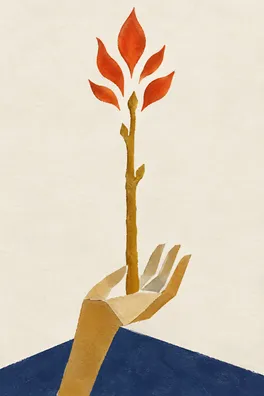
Ace of Wands
Reversed
In A small next step, the reversed Ace of Wands suggests a delayed beginning, fading energy, or an invitation that has not found the right conditions. Applied to friendship, it asks whether a wish to reconnect needs a gentler start, more time, or an honest adjustment. It does not say that enthusiasm must be forced or that a pause means the friendship has no value.
If you have been meaning to arrange something but keep postponing it, consider whether you are tired, unsure what to propose, or waiting for circumstances to settle. A small message or simple plan may be easier than a big gesture. Alternatively, if the interest is genuinely low, acknowledging that may be kinder than making a promise you cannot sustain.
Choose one manageable action: send a warm check-in, suggest a brief meeting, or give yourself permission to revisit the idea later. Notice what gives you energy rather than treating delay as failure. Does this connection need a small spark, or would waiting make the next step more genuine?
The upright Queen of Wands brings self-assured warmth to the friendship question, while the reversed Ten of Cups asks for honesty about any gap between an ideal of closeness and the relationships as they actually feel. The reversed Ace of Wands then lowers the stakes around action: a beginning may be delayed, energy may be limited, or a smaller invitation may fit better. Together, the cards suggest that care and reciprocity grow through authentic expression, realistic expectations, and steps that can be sustained.
A possible tension is that confidence can help you state what you need, yet it can also overshadow a friend’s differing capacity if you assume enthusiasm will be shared. At the same time, accepting imperfections should not become a reason to keep important needs hidden. These cards do not decide whether a relationship is right; they leave room for different rhythms, limits, and responses.
For the coming week, try one low-pressure friendship check-in: share one specific thing you would enjoy doing together, and ask what would work for the other person. Keep the plan small enough that either of you can suggest an adjustment. Afterward, notice whether the exchange felt open and mutual, without treating one response as a final verdict. What kind of invitation would express your care while leaving room for your friend’s real preferences?
A question to take with you
What would an honest, low-pressure invitation to a friend look like for you?
Group 2
Group 2
Learning
What approach could make learning feel more open?
01Where you are
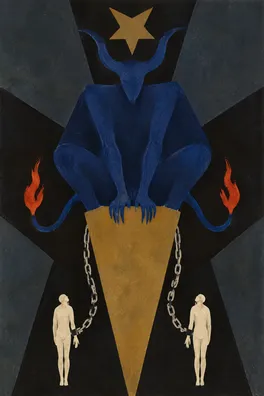
The Devil
Reversed
In Where you are, the reversed Devil points to recognizing a constraint and beginning to regain choice. In learning, that might mean noticing a rigid habit, an unhelpful comparison, or a belief that you must master everything quickly. The card speaks of a transition toward autonomy, not instant freedom from every difficulty. It asks you to see what has started to loosen and how to protect that opening.
For example, if studying has become tied to constant checking or fear of making mistakes, you could try a short session focused on curiosity rather than performance. If the obstacle is practical, such as limited time, naming it clearly can help you choose a realistic format. The point is not to blame yourself for constraints, but to distinguish what you can adjust from what needs support.
Write down one learning habit you want to change and one small condition that would make a freer choice easier. You might ask a trusted person for structure or encouragement. What constraint feels less fixed than before, and how could you give your new freedom room to grow?
02What needs attention

Two of Pentacles
Reversed
In What needs attention, the reversed Two of Pentacles highlights overload, uneven allocation of time, or a routine that no longer balances. For learning, it suggests that juggling too many subjects or obligations could make the process feel closed and hurried. This is not a measure of your ability; it is a prompt to examine whether your current arrangement asks more of your attention than it can comfortably give.
If you are trying to fit study into every spare moment, for instance, you might end up switching tasks without getting a satisfying stretch of focus. A schedule that once worked can also become unrealistic when responsibilities shift. Rather than adding another productivity system, consider which commitment can be paused, simplified, or moved so that learning has a clearer place.
Choose one minor adjustment and communicate it if someone else depends on your time. A shorter, protected session may be more useful than an ambitious plan that increases pressure. What could you set aside for now so your attention has a fair chance to settle?
03A small next step
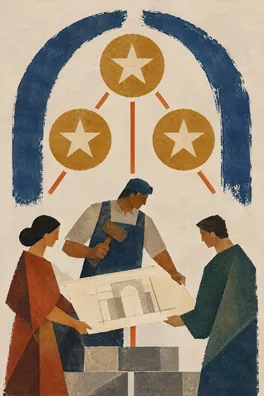
Three of Pentacles
Upright
In A small next step, the upright Three of Pentacles recommends learning through shared effort, practical feedback, and respect for developing skill. It represents the move from an idea into something built with other people’s contributions. For your question, an open approach may come from treating learning as a craft you can practice, rather than a test you must pass alone.
If you are working through a topic, you could share a small piece of progress with a classmate, mentor, or knowledgeable colleague and ask one precise question. You might discover that another person’s perspective clarifies a gap or offers a useful method. Collaboration does not mean surrendering your own judgment; it can help you see what each person knows and what the next step requires.
Make one concrete sample, solve a small problem, or explain an idea aloud, then ask for specific feedback. Agree on a manageable follow-up rather than taking on a whole new project. Whose perspective could help you build skill, and how can you make your own contribution visible?
The reversed Devil begins with a loosening constraint: perhaps a habit or assumption no longer needs to govern how you learn. The reversed Two of Pentacles adds a practical caution that too many demands can crowd out curiosity, while the upright Three of Pentacles offers collaboration and craft as a constructive way forward. Together, the cards point toward learning that has room to breathe: more choice, a manageable amount of effort, and support that makes progress tangible.
There is a tension between wanting autonomy and accepting help. You might worry that asking for feedback will make the learning feel less your own, or that reducing commitments means you are not trying hard enough. An alternative reading is that choosing a sustainable pace and working with others can strengthen independence rather than diminish it. The cards do not prescribe a method; they invite you to notice what genuinely supports engagement.
For the coming week, try one focused learning session at a realistic length, then share a small piece of work or a question with someone who can respond constructively. Before you begin, write down what you hope to understand; afterward, note what changed and what still feels unclear. Keep the experiment small enough to repeat or revise. What kind of support would help you feel more curious without giving away ownership of your learning?
A question to take with you
What could you simplify or share to make learning feel more open?
Group 3
Group 3
Work and purpose
What deserves my attention in my work right now?
01Where you are
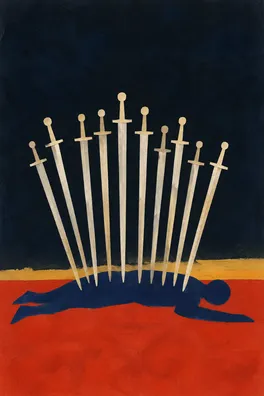
Ten of Swords
Reversed
In Where you are, the reversed Ten of Swords suggests recovery after a difficult ending or low point, with some traces of the experience still present. In work and purpose, this can invite you to recognize what has begun to improve without demanding that you feel fully restored. The card is about gradual rising and learning from what happened, not proof that a particular hard period is over.
For example, if a project or role has recently changed, you might notice that one part of your routine is getting easier even while confidence remains unsettled. That mixed state is understandable. Looking back only to judge yourself may obscure the useful information you gained about workload, communication, or the conditions you need to do good work.
Write down one old pattern you do not want to repeat and make its reminder practical, such as noting a limit in your planning process. Recovery can include pacing, not just pushing forward. What lesson from a difficult work experience would you like to carry, and what are you ready to leave behind?
02What needs attention
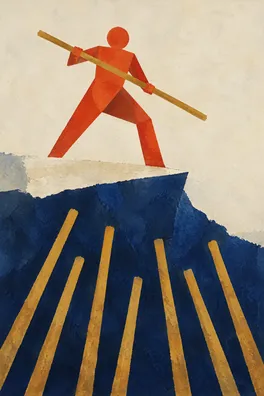
Seven of Wands
Upright
In What needs attention, the upright Seven of Wands asks you to defend a position, boundary, or piece of work that matters under pressure. It recognizes courage and perseverance, but it does not require resisting every challenge or treating disagreement as an attack. The useful question is what deserves protection and what level of effort is reasonable to maintain it.
If several requests compete for your time, for instance, you might need to state which commitment you can honor and which one needs a different timeline. A clear alternative can show that a boundary is not a refusal to contribute. It can also help you distinguish a genuine priority from a reflex to prove your value by accepting everything.
Name one limit in direct, respectful language and pair it with an option you can realistically support. Then observe whether the arrangement protects the work and your capacity. What are you defending in your work, and what would a fair amount of effort to defend it look like?
03A small next step
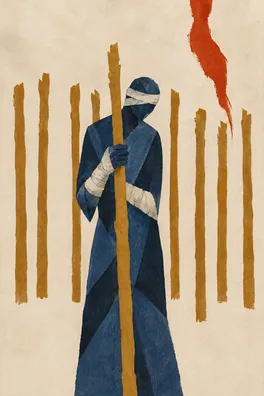
Nine of Wands
Reversed
In A small next step, the reversed Nine of Wands points to fatigue, hardened defenses, or the possibility of gradually letting someone trusted closer. At work, it asks whether you are bracing for another difficulty without enough support, or whether an old disappointment is shaping your response to a present situation. Either reading deserves care; lowering your guard need not mean abandoning sensible boundaries.
If you have been handling a demanding task alone, you could share a specific concern with a trusted colleague or mentor. Asking for practical advice may help you see a choice that is difficult to notice when tired. If you need privacy, a written list of what is urgent and what can wait might be a quieter way to reduce the burden.
Try one small act of support-seeking and state what kind of help would be useful, such as a second opinion or a short check-in. Avoid treating exhaustion as a personal failing or as a reason to make a rushed decision. What have you been bracing for, and what support would make the next step feel more manageable?
The reversed Ten of Swords describes a possible period of recovery, where the hardest experience may be behind you but its effects still deserve attention. The upright Seven of Wands brings focus to a boundary or contribution worth protecting, while the reversed Nine of Wands asks whether persistence is turning into exhaustion or isolation. Together, these cards suggest that work and purpose may call for both resilience and an honest review of what your resilience is costing.
One tension is that holding your ground can protect meaningful work, yet continual defense can drain the energy needed to do it. Another reading is that lowering your guard does not have to mean giving up a boundary; it could mean letting in practical help while remaining clear about your limits. The cards cannot determine what your workplace requires, so your circumstances and judgment remain central.
For the coming week, choose one work pressure and write down what you are protecting, what you can reasonably offer, and what support or adjustment would help. Share one specific request or alternative with someone appropriate, or use the notes to clarify your own next move. Keep the experiment small and review how it affects your capacity. What boundary or source of support would help you continue without having to brace alone?
A question to take with you
What deserves protection in your work, and what support might make that protection sustainable?